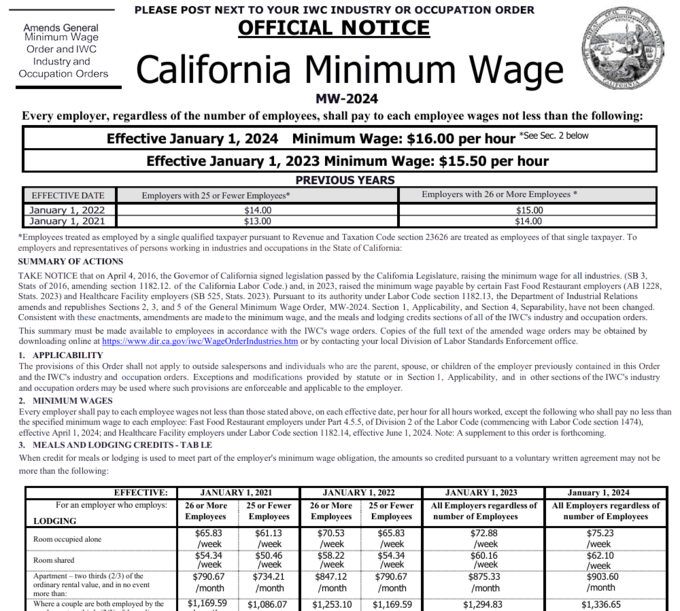
한인 고용주들, 특히 일식당의 경우, 직원들을 구하기 매우 힘들다. 특히 중가주 처럼 한인이 거의 없는 지역일 경우 타지에서 온 직원에게 숙소까지 제공해줘야 한다. 이렇게 직원들이 타지에서 왔을 경우 숙소와 식사를 제공할 경우 숙식비용을 최저임금에 크레딧으로 적용할 수 있다는 사실을 한인 고용주들이 몰라서 손해를 본다. 식사를 제공하고 직원 숙소로 구입한 주택에 머물도록 혜택을 제공해줬던 종업원들로부터 임금 관련 소송을 당한 다음에야 이 종업원들에게 식비와 숙박비를 안 받았기 때문에 노동법 소송에서 주장하는 요구 액수에서 공제해야 한다고 아쉬 워하는 경우를 많이 봤다.
그러나 이런 식비와 숙박비 공제에 대한 문서로 된 쌍방간 계약서가 없다면 아무 소용이 없다. 대부분의 한인 고용주들은 그런 계약서가 필요하다는 사실을 모른다. 캘리포니아주 노동청에서 규정하는 임금 명령서(IWC Wage Order)에 보면 식사 (Meal)와 숙박(Lodging)에 들어간 비용을 그 직원의 임금에 적용할 수 있다.
숙박의 정의는 일반적인 기준으로 볼 때 적절하고 청결한 숙소에 풀타임으로 거주하는 직원에게 숙소를 제공할 경우를 지칭한다. 이럴 경우 종업원들은 침대를 공유해서는 안 된다. 식비와 숙박비용은 종업원과 고용주 사이의 자발적인 문서로 된 계약서가 없으면 종업원의 최저임금에 크레딧으로 적용되지 않는다. 종업원과 고용주 사이에 이런 계약서가 있는 경우 크레딧으로 적용되는 액수는 2024년 1월부터 방을 혼자 사용할 경우 일주일에 $76.23 이고 방을 다른 종업원과 같이 쓸 경우 일주 일에 $62.10 이다.
아파트에 종업원이 묵을 경우 보통 렌트가격의 2/3 이거나 한달에 $903.60 이상일 수 없다. 만일 부부가 다 고용될 경우 역시 보통 렌트가격의 2/3 이거나 한달에 $1,336.65 이상이 크레딧으로 적용될 수 없다. 식비의 경우 아침은 한 끼에 $5.78, 점심은 $7.97 그리고 저녁은 $10.68 이 종업원의 최저임금에 크레딧 으로 적용될 수 있다.
식비의 경우 종업 원의 작업 스케줄에 맞는 제대로 된 식사를 제공해야 크레딧으로 적용될 수 있다. 만일 종업원 이 먹지 않은 식사나 묵지 않은 숙박일 경우는 식비나 숙박비를 이 종업원에게 지불할 최저임 금 액수에서 공제될 수 없다. 만일 채용의 조건으로 종업원이 일하는 곳에서 거주해야 하거나 고용주가 소유한 숙소에서 살아야 한다면 고용주는 IWC Wage Order 에 적힌 위 가격보다 더 많은 액수를 종업원에게 렌트비로 받을 수 없다. IWC Wage Order 에는 2021년 1월부터 2024년 1월 사이에 종업원의 최저임금에 크레딧으로 적용될 수 있는 숙박비와 식비 액수가 적혀 있으니 고용주들이 참조하 길 바란다. 이런 내용들이 들어가 있는 숙박비용 상쇄 계약서 (Meal Value Agreement)를 필자의 사무실에 서 필요로 하는 한인 고용주들을 위해 작성해 줄 수 있다.
이 계약서에는 다음과 같은 내용들이 포함되어 있다. (1) 고용주는 종업원의 임금의 일부로 근무시간 동안에 직장내서 종업원들에게 가능한 식사를 먹을 수 있도록 제공한다는 문구 (2) 식사 내용와 식사들의 가격 (3) 종업원은 이 식사를 휴식시간이나 식사시간에 먹을 수 있다는 문구 (4) 종업원은 이런 식사의 가치가 종업원 의 임금에서 공제한다는 사실에 동의한다는 문구 (5) 식비와 숙박비용이 최저임금에 크레딧으 로 적용한다 는 사실에 종업원이 자발적으로 동의한다는 문구 (6) 아침, 점심, 저녁식사에 각각 최저임금에서 공제할 가격 공시 (7) 종업원은 이런 식사 베네핏의 결과로 생기는 소득에 대한 소득세를 알아서 지불해야 한다는 문구 (8) 종업원은 고용주와 의논해서 고용주가 제공하는 식비와 숙박비같은 베네핏들을 추가하거나 수정할 권리가 있다는 문구 (9) 종업원과 고용주 쌍방은 종업원이 채용 조건으로 고용주가 제공하는 식사를 소비해야 하는 의무가 없다는 사실을 인지한다는 문구 등이다.
[김해원칼럼]샐러리페이직원도오버타임관리필수
2024년 06월 06일 0
노동 및 고용법 전문 김해원 변호사
소위 월급제인 ‘샐러리’(salary)로 급여를 지급하는 직원은
타임카드가 필요 없다는 생각은 잘못이다. 역시 오버타임이
면제되지 않는 직원이라면 월급제를 받는 직원도 타임카드
작성이 요구된다. 월급제라 하더라도 하루 8시간 이상, 주
40시간 이상 일한 것은 모두 오버타임이 적용돼 1.5배 임금
을 월급과는 별도로 지급해야 한다.
그런데 직원들에게 연봉 즉 샐러리로 임금을 지급하는 일부
한인 고용주들의 잘못된 노동법 상식으로 인해 피해가 속출
하고 있다. 많은 고용주들이 종업원에게 1년에 고정된 연봉
으로 임금을 지불하면 오버타임을 페이 하지 않아도 되고 페
이스텁 (Itemized Wage Statement)을 주지 않아도 되고 타
임카드도 찍게 할 필요 없다고 생각하는데 이는 극히 예외를
제외하고는 모두 노동법 위반에 해당한다. 또한 샐러리로 임
금을 지불해도 한 달에 두 번 이상 임금을 페이해야지 월급
이라고 생각하고 한 달에 한 번만 임금을 주면 위법이다.
시간당이 아니라 연봉으로 임금을 지급하더라도 오버타임 근무가 발생했을 경우 반드시 종업원에
게 해당 급료를 지급해야 한다. 샐러리 임금의 경우 연봉 액수를 52주로 나눈 뒤 다시 40시간으로 나
누면 시간당 급료가 계산되는 데 1일 8시간을 넘거나 일주일에 40시간 이상 근무하는 오버타임에 대
해 이 수치의 1.5배를 오버타임으로 근무한 시간에 곱해 줘야 한다.
대부분의 경우 한인 고용주들은 샐러리로 지불하면 그 샐러리에 기본급 (regular wage)과 오버타임
임금이 다 포함되어 있다고 착각해서 오버타임 임금을 별도로 지불하지 않아서 오버타임 관련 소송
을 당하게 된다.
또 연봉(샐러리)으로 지급한다는 이유로 타임카드를 작성하지 않는 것도 노동법 위반이 된다. 캘리
포니아주 노동법 상 페이스텁 역시 연봉이나 시간당 급료를 받는 직원 타임카드를 스스로 쓰거나 찍
게 해야 하고 페이스텁을 제공해야 한다.
늘 같은 시간을 근무해서 늘 같은 임금을 주거나 모든 직원들에게 같은 급료를 준다는 이유로 페이
스텁을 제공할 필요가 없다고 잘못 아는 고용주들이 많은데 이는 사실이 아니다
캘리포니아주 노동청이 다운타운 한인 의류업체들을 대상으로 실시한 노동법 위반업체에 대한 단
속에서 가장 많은 벌금과 위반사항으로 지적된 항목이 페이스텁의 미지급이다. 페이스텁에는 세금
명세뿐만 아니라 정규시간당 급료, 정규 근무시간, 오버타임 시간당 급료, 오버타임 근무시간, 유급
병가 시간, 고용주의 주소, 직원의 소셜번호 마지막 4 번호 등이 반드시 명시되어야 한다. 샐러리로
임금을 준다고 페이스텁에 시간당 임금을 안 적거나 일한 시간을 안 적는 경우 모두 노동법 위반이
다. 또한 현금으로 임금을 지불한 다 해도 페이스텁을 현금과 같이 반드시 직원에게 제공해야 한다.
캘리포니아주 노동법은 페이스텁의 미지급 업주를 적발할 경우 종업원 한 명 당 매 임금지급 기간별
로 250 달러의 벌금을 부과하고 있다.
캘리포니아주 노동청의 2015~16년 단속 통계에 따르면 총 2,072건의 적발 건수 중 타임카드 및 임금
명세서 (페이 스텁) 기록 위반이 449건으로, 노동법 위반 내용이 가장 많았던 859건의 종업원상해보
험(워컴)에 이어 두 번째로 많은 것으로 집계됐다.
매니저라도 오버타임 면제 조건을 만족시켜야 하는데 만족시키는지 여부를 생각하지 않고 무조건
매니저는 타임카드도 필요 없고 페이스텁도 필요 없다고 착각을 하게 된다. 캘리포니아주 노동법 상
매니저나 퍼바이저급 직원의 오버타임 면제 요건은 △경영과 관련된 임무와 책임을 수행하고 △2인
이상의 직원에게 일을 시키며 △직원 채용과 해고의 권한이 있고 △업무 수행에 있어 재량권을 가져
직접 판단하며 △최소한 캘리포니아주가 정한 최저임금의 2배 이상을 받고 △매니저 위주의 업무를
근무시간의 50% 동안 하는 경우다.
만일 매니저급이 과연 오버타임이 면제되는 지 아닌 지 확실치 않을 경우에는 무조건 타임카드를 적
거나 찍도록 해야 한다.. 그리고 타임카드를 적을 때 식사시간도 반드시 적도록 해야 한다.
Haewon Kim, Esq.
Law Offices of Haewon Kim
3580 Wilshire Blvd., Suite 1275 Los Angeles, C
2024년 7월 1일부터 대부분의 캘리포니아 의료종사직원(healthcare workers)의 최저임금이 16달 려에서 23달러로 인상된다. 이 법안 SB 525는 간호조무사, 의료 기술자 및 청소근로자, 간호사, 의사, 케어기버, 메디컬 레지던트, 인턴, 펠로우, 테크니션, 정원사, 경비원, 사무직, 푸드 서비스 직원, 선물가게 직원, 메디컬 코딩과 빌링 직원, 스케줄 직원, 콜센터, 창고직원, 세탁 직원들에까지도 적용된다.
이 법안은 역시 오버타임이 면제되는 직원을 위한 연봉 상한선도 인상시켰다. 즉, 캘리포니아주에서 오버타임과 식사, 휴식시간이 면제되는 직원들은 최소한 주 최저임금의 2배 이상의 셀러리를 받아야 하는데 의료종사직원의 경우 주 노동법 조항 1182.12에 따르면 의료종 사직원 최저임금의 150%나 주 최저임금의 두 배 즉 200% 중 많은 액수를 받아야 면제가 가능하다.
주 노동법 조항 1182.14과 1182.15에 추가될 법안 SB 525는 의료기관과 계약을 맺어서 병원 내에서 의료 서비스를 제공하는 독립계약자들에게도 적용되고 이 의료기관들은 직간접 적으로 독립계약자들의 임금과 근무시간, 근무조건 등을 결정해야 한다.
그러나 이 법안이 적용되는 의료종사직원에 외부 세일즈맨이나 의료종사직원이 아닌 공공 의료 기관 종사자, 병원에 고용되지 않은 배달부와 폐기물 수집자, 의료운송서비스 종사자는 포함된 어 있지 않다.
이 법안이 적용되는 의료기관으로는 병원, 정신병원, 간호 기관, 홈헬스 에이전시 등이다. 이 법안에 따라 병원의 크기와 종류에 따른 4가지 종류의 최저임금 스케줄이 2024년 1월에 발표됐는데 이는 다음과 같다..
1. 대형병원: 1만 명 이상의 풀타임 직원이 있는 대형병원, 투석클리닉 그리고 2023년 1월 1일 현재 5백만 명 이상 인구가 있는 카운티가 운영하거나 소유한 병원 직원들의 최저임금은 2024년 6월 1일에는 시간당 23달러, 2025년 6월 1일에는 24달러, 2026년 6월 1일에는 25달러로 올라간다.
2. 병원: 메디케어/메디케이드 환자가 많은 병원, 시골병원, 25만 명 이하 인구가 있는 카운티가 소유하거나 운영하는 병원의 직원들의 최저임금은 2024년 6월 1일부터 시간당 18달러이고 매년 3.5% 증가하고 2033년 6월 1일에는 시간당 25달러로 올라간다.
3. 클리닉: 정부기관이 운영하지 않는 무료 클리닉, 커뮤니티 클리닉, 어전트 케어 클리닉, 시골 클리닉 등의 직원들의 최저금은 2024년 6월 1일부터 시간당 21달러로 올라간다.
4. 기타 병원 직원들의 최저임금은 2024년 6월 1일부터 시간당 21달러, 2026년 6월 1일부터 시간당 23달러 그리고 2028년 6월 1일부터 시간당 25달러로 달라진다.
병원 고용주들은 이 법안이 자기네 병원에 어떻게 적용되는지 평가해야 하고 최저임금 인상폭을 그에 따라 결정해야 한다. 만일 병원이 이런 최저임금 상승을 적용할 수 없을 경우 면제 (waiver)해 주기도 한다. 그런 병원은 새 최저임금 스케줄의 적용을 임시 정지시켜 달라고 요청하거나 다른 스케줄을 적용해 달라고 요청할 수 있다. 물론 이 최저임금을 지불할 경우 병원이 폐쇄될 수 있다는 증명할 재정서류와 병원 서류들을 제출해야 한다. 주 노동청은 곧 사이트에 이 면제 프로그램에 대한 자세한 정보를 올릴 예정이다.
이 법안의 적용에서 면제되는 병원은 주 병원국이 소유하거나 통제하는 병원들과 인디언 부족 클리닉 등에 불과하다. 카운티가 소유하거나 운영하는 병원 직원들은 2025년 1월 1일 이전 에는 이 법안의 적용을 받지 않는다.
주 건강국이 발표한 병원 목록(SB-525- Fact-Sheet-HCAI-Hospital-Lists-04_23_24.pdf )을 보면 어떤 병원이 이 최저임금의 적용을 받는지 알 수 있다.
병원들은 새 최저임금 포스터 MW-2024.pdf (ca.gov)를 부착해야 하고 임금이 달라지는 직원들에게 새로운 통지서 (Notice to Employee)를 작성해서 줘야 한다.
작년 10월 초에 사무실에 좀도둑이 들어와서 백업 노트북을 훔치고 책상 금고를 강제로 열어서 사무실을 엉망으로 만든 사건이 있었다.
더블도어 문을 무슨 기구로 강제로 열어 제껴서 들어온 뒤 금고에 무슨 현금이 있다고 착각하고 오픈했는데 수표책만 있으니까 그건 바닥에 던져 놓아 어지러운 광경을 봐야 했다.
다행이 중고 노트북이라서 400-500달러 정도 가치만 있었지만 가볍고 현재 사용 중인 노트북보다 새거 라서 언젠 가는 집에 가져가려고 했는데 안타까웠다.
필자가 화요일 새벽까지 사무실에 있었고 역시 같은 날 도둑이 들었던 다른 사무실 직원들이 퇴근한 시간이 5시 정도였고 도둑이 든 사실은 청소부가 발견한 시각이 9시 정도라서 4시간 정도만 폐쇄회로 TV를 확인하면 도둑을 찾아낼 것이라고 확신했다.
그러나 그건 너무나 나이브한 생각이었다. 필자 사무실이 있는 12층에는 CCTV가 없고 1층과 출구에만 있는데 경비원들 이 열심히 그걸 봤어도 의심이 가는 사람이 없다는 것이다.
빌딩 사무실은 이미 화요일 밤에 보고를 받고 수요일 아침에 와서 피해 여부를 확인하고 갔다. 그래도 정신을 차리고 올림픽 경찰서에 직접 가서 신고했다. 미국에 와서 33 년 만에 처음 경찰서에 본인의 일로 간 것이다.
친절 한 데스크 직원에게 신고했더니 경찰이 가서 조사할 것이라고 답을 듣고 사무실로 돌아왔다. 사무실 문은 흉하게 망가져서 빌딩측에서 쇠사슬로 묶어줬다.
주변에서는 경찰이 절대로 관심 도 없을테니 포기하라고 그랬다. 그런데 놀랍게도 (?) 두 명의 정복 경찰들이 와서 탐문 수사를 하고 그 뒤에는 CSI 요원이 와서 지문 감식 등 자세하게 증거를 수집해 갔다.
마치 드라마를 보는 것 같은 과정을 겪으면서 이런 별거 아닌 절도 사건에 친절하게 대해줘서 감동했다. 그 뒤에 언론에서 훔친 아이폰과 노트북들이 발견됐다고 보도해서 다시 올림픽 경찰서에 가서 전화번호와 노트북 시리얼 번호를 놓고 갔더니 친절하게 자기들에게는 도난 당한 노트북이 없다는 이메일이 왔다.
그래서 포기하고 있었는데 사건 발생 6 개월 만인 지난 4 월 초 형사에게 서 연락이 왔다. 10월에 사무실 문에서 수집한 지문에서 용의자 지문을 발견했고 사진을 보내 주면서 아는 사람이냐고 질문이 왔다.
당연히 첨 보는 사람이라고 대답했더니 그 다음에 수 십번 의 이메일을 거쳐 검찰에 체포 영장을 신청했다는 이메일을 최근에 받았다.
용의자 이름을 구글 에 검색해 보니 절도 전과가 많은 분이었다. 물론 노트북은 이미 암시장에 처분했을 것이라고 생각하지만 같은 층에 있는 다른 세입자에게 이 소식을 알렸더니 그래도 범인이 잡힐 것이라서 다행이라고 안심들 했다.
물론 지금까지 운전 중에 전화기를 쓰다가 티켓을 받거나 로컬 길에서 신호 위반으로 티켓을 받거나 심지어는 무단 횡단을 했다는 이유로 생일날에 티켓을 받으면서 왜 걸었는데 운전면허증을 경찰에 보여줘야 하냐는 의심을 하는 등 경찰과 마주친 일은 주로 유쾌하지 않은 경우였다.
그러나 경찰이 취객들에게 맞는 한국 경찰과 달리 미국 경찰은 민중의 지팡이가 아니라 범죄도시 3에 나오는 대로 민중의 몽둥이일 가능성이 높다.
여러 민족과 인종이 섞인 미국에서 법을 강하게 집행하기 위해서는 과잉 대응이라는 말을 들을 정도로 세게 진압하는 경우가 많다.
그러나 지난 2020년 BLM과 경찰 (예산 삭감을 요구하는) 디펀딩 사태를 겪으면서 많은 경찰들이 좌절감을 겪고 경찰 지원자 수가 줄어들었다.
로스쿨 베프의 가족도 경찰 가족인데 이런 사회 정서에 너무나 배신 감들을 느꼈다. 한인 언론은 2000년대만 해도 LAPD 폴리스 아카데미에서 졸업하는 한인 경찰들을 매번 졸업식에 가서 소개했지만 인제 그것도 거의 안 할 정도로 관심이 식었다.
그러나 한인 언론들이 BLM이나 경찰 디펀딩에 대해 목소리를 높여서 반대한 경우도 거의 없다. 아시아계 들 이 범죄의 피해를 많이 당하자 아시아계의 BLM 찬성이나 디펀딩 소리가 쑥 들어간 것은 사실이다.
피해를 안 당하면 경찰 디펀딩에 찬성하고 피해를 당하면 보호해 달라고 경찰에 요구하는 치사한 집단이다.
아시아계가 범죄를 피해를 당하거나 경찰의 과잉 대응으로 피해를 겪으면 아시아계 인종차별이라고 무조건 들고 일어나는 태도를 옳지 않다고 본다.
인종 용광로인 미국에서 인종 차별이라는 용어는 함부로 쓰면 안 된다고 본다.
오늘도 프리웨이가 로컬도로를 오가는 경찰차들을 보면서 운전하면서 전화기를 사용하면 안되지 하고 뜨끔하지만 안전하게 느끼면서 감사해 한다.
Claims of wage theft filed by California workers are routinely left in limbo for years by state investigators who are facing a massive backlog of cases, according to a recent audit of the California Labor Commissioner’s office.
As a result of the sluggish pace, workers are left waiting years to receive money they may be owed, the audit found.
When claims are eventually investigated, the Labor Commissioner’s Office often does not recover wages. The audit found that in cases where workers requested help recovering their wages, they received the full amount owed to them only 12% of the time.
The backlog of unresolved cases has more than doubled in the last five years, from 22,000 claims in fiscal year 2017-18 to 47,000 in fiscal year 2022-23, the audit found.
The Labor Commissioner would need “hundreds of additional positions under its existing process to resolve the backlog,” California State Auditor Grant Parks wrote in a letter accompanying the audit to Gov. Gavin Newsom and state lawmakers Wednesday.
Wage theft occurs when employers fail to pay minimum wage or overtime rates or force workers to forgo legally required break times.
State law requires that a decision be made on a wage claim within 135 days from when it was first filed. But the Labor Commissioner’s office often takes two years or longer to process wage claims — more than six times longer than the law allows, the audit found.
Some 2,800 claims involving upwards of $63.9 million in unpaid wages have been open for five years or longer, according to the audit.
“Workers have virtually no recourse because it takes so long. We need emergency hiring of these positions. We need the state to deal with it,” Lorena Gonzalez, head of the California Labor Federation, said of the audit’s findings.
Gonzalez said the audit underscored a problem that labor advocates and others have pointed out for years. She criticized the state for failing to act with urgency to better protect workers vulnerable to exploitation, especially low-wage laborers.
“Where is the outrage? How many hearings have [lawmakers] had on retail theft, on crime? Well this is a crime, and it happens every day to working people.”
The Los Angeles, Oakland, and Long Beach field offices of the labor commissioner have among the biggest backlogs of claims and on average take the longest to close wage theft investigations, according to the audit.
A slow hiring process and low salaries that make it difficult for the agency to retain staff and fill positions have contributed to the high vacancy rates. Vacancy rates in field offices ran as high as 45% in Santa Ana, 44% in Sacramento, 38% in Oakland and 35% in Los Angeles and Long Beach as of June 2023.
But even if all vacant positions were filled, the labor commissioner would be short of the manpower needed to address the backlogs and process claims in the time frame required by law, the audit found. The labor commissioner has about 315 positions, about a third of which are vacant. But it needs 892 full-time positions, nearly three times as many, the audit said.
The audit found that poor technological infrastructure that has led to inaccuracies, and spotty data in the agency’s case management system has also made it difficult for the office to track claims.
California’s Department of Industrial Relations, which includes the Labor Commissioner’s Office, said it “is committed to finding ways to continually improve its programs and ensure that it meets its mission to protect and improve the health, safety and economic well-being of over 18 million wage earners.”
The department’s director, Katrina S. Hagen. said the division is working on improvements to the case management system and conducting a study of staff salaries to improve retention.
And last week, the Department of Industrial Relations announced $8.5 million in grants to 17 local prosecutors to run wage theft enforcement programs locally and bring criminal charges against problem employers.
Other California agencies responsible for enforcing labor laws have also been beset by staffing problems and claims of ineffectiveness. The Division of Occupational Safety and Health, known as Cal/OSHA, is grappling with a 38% job vacancy rate and faced sharp criticism at a February hearing of the Assembly Committee on Labor and Employment, where farmworkers testified that they’d been exposed to extreme heat and pesticides on the job.
The release of the audit comes as lawmakers and lobbyists are in negotiations over the future of California law that labor leaders say is a crucial alternative for dealing with wage theft and other workplace abuses.
The law, known as the Private Attorneys General Act, or PAGA, gives workers the right to file lawsuits against their employers over back wages and to seek civil penalties on behalf of themselves and other employees.
A business-backed initiative seeking to repeal the law will appear on the ballot in November, unless a deal is reached in the next few weeks.
The California Labor Federation and other labor groups are backing Assembly Bill 2288, introduced by Ash Kalra (D-San José), that aims to give PAGA more teeth by allowing courts to order employers to correct violations. Advocates say it will help ensure bad behavior by employers is halted, rather than simply awarding a settlement and allowing a company to go back to problematic practices.
Pizza Hut employees strike in protest of allegations of wage theft and abusive scheduling practices in Los Angeles on Jan. 26, 2024. Photo by Lauren Justice for CalMatters
IN SUMMARY
The state auditor confirms that severe understaffing, poor training and other problems at the Labor Commissioner’s office are causing long delays in wage theft investigations.
Severe understaffing, slow hiring, poor training and inefficient bureaucracy combine to slow California’s investigations of wage theft claims, the state auditor’s office concluded Wednesday.
Workers are left waiting years for money they claim they are owed when their employers fail to pay the minimum wage, overtime premiums or legally required break times. Then, those who need the office’s help to collect on their back pay only get all their money back 12% of the time.
The audit confirms the findings of several recent news reports on the problem, including a 2022 CalMatters series detailing long waits and low payouts for workers making claims.
The audit stated it would take the Labor Commissioner’s Office wage claims unit nearly 900 staff members to fully address the backlogs and handle claims in the time required by law. That’s almost three times the positions the unit currently has — about a third of which are vacant.
Though auditors pinned the office’s crisis largely to the understaffing, it also found:
The office has a unit to help workers who win their claims recover the money from resistant employers, by placing liens on property, levying bank accounts or in some cases, revoking the employers’ business licenses. But that unit didn’t recover any of the money in most cases, and often did not use all the methods available.
Hiring is overseen by two different human resources departments: the Labor Commissioner and that of the larger Department of Industrial Relations. The auditor found the slow process results in the office losing qualified candidates. Pay is also sometimes lower than comparable state and local government jobs, the audit found, particularly for hearing officers.
The audit criticized the office for failing to adequately train new staff and supervisors, and for using a case management system that was rife with inaccuracies and unreliable data, making it difficult for the office to track the progress of wage claims.
In response to the report, Industrial Relations director Katrina S. Hagen wrote that the office is working on improvements to the case management system and conducting a study of staff salaries to improve retention. She also noted California is passing increasingly complex new labor laws that may prevent the office from meeting case deadlines even with enough staffing.
The wage claim system is decades old. In recent years, California labor officials have increasingly tried alternative enforcement methods, including workplace-wide investigations in low-wage industries with the help of worker advocates. Last week, they announced awarding $8.5 million to 17 local prosecutors to bring criminal charges against problem employers.
But advocates say the individual claim system is still an important way for workers who believe they’ve been underpaid to recover small amounts without needing to hire a lawyer.
The audit immediately prompted labor leaders to call for the state to prioritize hiring at the Labor Commissioner’s Office. The California Labor Federation said the office should get emergency hiring authority.
“Today’s audit findings demonstrate that California workers face an enforcement crisis,” federation leader Lorena Gonzalez said in a statement. “Our state enforcement agencies weren’t designed to handle this magnitude of labor law violations.”
Sen. Steve Glazer, an Orinda Democrat who pushed for the audit last year in response to the news reports, lambasted the office.
“The California State Auditor’s report makes clear that our State Labor Commissioner is a toothless enforcer of our wage theft laws,” he said in a statement. “Immediate and decisive action to restore integrity and effectiveness to the Labor Commissioner’s office is needed.”
But Glazer isn’t planning any bills to address the issue, his spokesperson Steven Harmon said.
The release of the audit puts pressure on lawmakers and business and labor lobbyists to reach a deal in a simmering battle over another California labor law. A longtime target of the California Chamber of Commerce and other employers’ groups, the Private Attorneys General Act allows workers with private lawyers to take on the role of the state in suing their employers for alleged violations.
The class-action suits brought against employers generate about $200 million a year in penalties that get deposited into a fund for state labor enforcement efforts. Workers’ advocates argue those cases are also diverted from what would be an even worse backlog for the Labor Commissioner’s Office.
A Chamber-backed measure to repeal the law is scheduled to be on voters’ ballots in November, though business and labor groups have until late June to reach a compromise that could be passed by the Legislature instead.
“This is absolutely the worst time to even consider” repealing the law, said Alexandra Suh, co-president of the California Coalition for Worker Power and executive director of the Koreatown Immigrant Workers’ Alliance in LA.
The alliance has been helping workers file wage claims for more than 30 years, and Suh said delays at the office have been a longstanding problem.
“This audit is even more clear evidence in my mind that we need to preserve PAGA, preserve the right of workers to stand in the shoes of the state to address violations and relieve pressure on the Labor Commissioner’s Office,” Suh said.