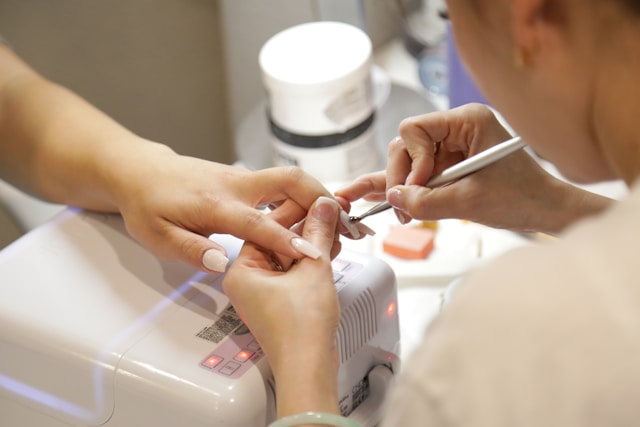
캘리포니아주 하원 법안 AB-504은 2025년부터 공인 매니큐어사(license manicurist)에게 독립계약자 테스트인 ABC 테스트를 적용하도록 규정한다. 2024년까지는 공인 매니큐어사가 독립계약자인지 아닌지를 결정하기 위해서 이전의 보렐로 테스트를 적용했다.
‘AB 5’ 법안은 독립계약자를 구분하는 기준으로 ABC 테스트를 사용토록 하고 있다. ABC 테스트에 따르면 고용주는 근로자가 독립계약자라고 주장하는 경우 이를 증명할 책임을 지며, (A) 업무수행과 관련해서 고용주의 직접적인 지휘나 통제 아래 있지 않을 것 (B) 통상 적인 고용주 회사 업무에서 벗어난 업무를 수행했을 것 (C) 독립계약자가 고용관계와 동일한 영역에서 독립된 사업을 수행한다는 세 가지 요소를 필요로 하고 이 요건들을 갖추지 못할 경우 회사 소속 직원으로 분류된다.
당초 이 ‘AB 5’ 법안에서 이발사, 미용사, 매니큐어사, (사마귀·점·털 등을 제거하는) 전기 분해 요법 숙련자 등은 면제됐었다. 이렇게 AB 5 법안에서 면제된 업종은 이전 독립계약자 기준 테스트인 보렐로 테스트에 포함된 11개 조항들을 만족시켜야 독립계약자로 인정받았다.
다음은 AB 5에 관련된 공인 매니큐어사에 대해 주 노동청의 질의문답들이다.
1. 캘리포니아에서 W-2 직원은 누구이며 1099 독립 계약자는 누구인가?
종업원은 최저임금 및 초과 근무 수당, 병가, 필수 식사 시간, 업무 중 상해에 대한 산재 보상 등 특정 권리를 누릴 수 있는 직원으로 간주된다. 독립 계약자는 더 적은 보호를 받는다. 고용주로부터 “독립 계약자”라는 말을 듣거나 W-2 양식 대신 IRS 양식 1099를 받았다고 해서 고용 지위가 결정되는 것은 아니다. 캘리포니아 법이 W-2 직원인지 또는 1099 독립 계약자인지를 결정한다.
캘리포니아주 법률(노동법 2778(b)(2)(L) 조항에 따라 면허를 소지한 피부미용사, 전기분해시술사, 매니큐어사, 이발사 또는 미용사는 사업주가 보렐로 테스트에서 규정한 다음 사항을 모두 증명하면 독립 계약자로 취급할 수 있다: (i) 해당 인물이 자체 요금을 설정하고, 자체 결제를 처리하며, 고객으로부터 직접 대금 을 지급받는다. (ii) 해당 인물이 자신의 근무 시간을 정하고 고객 수와 서비스를 제공할 고객을 결정할 단독 재량권을 가진다. (iii) 해당 인물이 자신의 고객 목록을 보유하고 자신의 약속을 예약한다. (iv) 해당 인물이 고객에게 제공하는 서비스에 대한 자체 사업 면허증을 보유한다. 네일 살롱에서 네일 서비스를 제공하는 트란을 예로 들어 보겠다:
1) 트란 씨는 자신이 원하는 대로 일주일에 두 번, 오후 12시에서 4시 사이에만 살롱에 와서 예약한 매니큐어와 페디큐어 서비스를 제공한다. 2) 그녀는 고객에게 페디큐어 또는 일반 매니큐어에 대해 $75를 청구하기로 결정했다. 3) 각 예약 후 그녀는 직접 결제를 받고 처리힌다. 4) 자신이 속한 카운티에 사업자 등록증이 있다. 5) 미용실 공간에 대해 지불하는 임대료에 대해 사업주에게 1099를 발행한다.
3. 면허를 소지한 공인 매니큐어사에게 2025년 1월 1일에 어떤 변화가 있나?
면허를 소지한 공인 매니큐어사에게는 위의 예외가 더 이상 적용되지 않는다. 즉, 공인 매니큐어사가 독립계약자인지 아닌지를 결정하기 위해 인제는 보렐로 테스트가 아니라 AB 5 법안에서 규정한 ABC 테스트가 적용된다. 다음과 같은 ABC 테스트에 따르면, 네일 살롱에서 일하는 매니큐어사는 고용주가 다음 사항을 모두 증명하지 못하는 한 종업원으로 추정된다:
A. 근로자가 업무 수행과 관련하여 사업주의 통제 및 지시로부터 자유로운 경우. B. 제공된 업무가 고용 사업주의 통상적인 업무 범위를 벗어난 경우. C. 근로자가 수행되는 업무와 관련된 것과 동일한 유형의 독립적으로 확립된 거래, 직종 또는 사업에 관례적으로 종사하는 경우.
예를 들어, 면허를 소지한 공인 매니큐어사로서 네일 살롱에서 매니큐어 서비스를 제공하는 경우, 그 근로자는 직원이며 최저임금, 병가, 식사 및 휴식 시간, 초과 근무 수당 및 산재 보험 적용 등 해당 고용 상태의 모든 권리와 보호를 받아 야 한다.
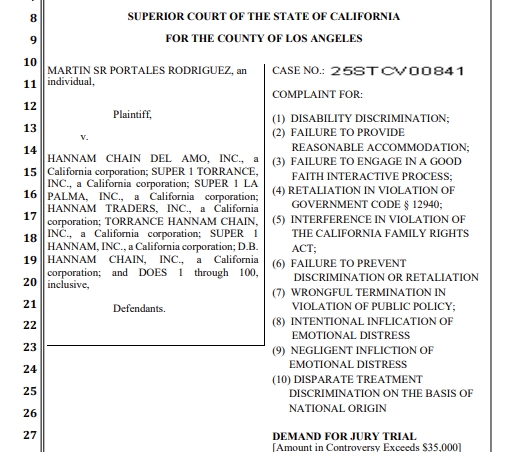
한남체인 계열 마켓에서 일하던 전 직원이 회사 측의 장애인 차별, 민족 차별, 정당한 조정 거부, 보복성 해고 등을 이유로 소송을 제기했다.
한남체인 전 직원 마틴 포르탈레스 로드리게스씨는 지난 1월 13일 한남체인 델아모점, 슈퍼1 토런스, 슈퍼1 라팔마, 한남 트레이더스, 토런스 한남체인, 슈퍼1 한남, DB 한남체인 등 7개 법인과 100명의 미지정 피고를 상대로 총 10가지 법률 위반을 주장하며 LA 수피리어 법원에 손해배상을 청구하는 소송을 제기했다.
본보가 확보한 소장에 따르면, 로드리게스 씨는 2022년 6월 24일부터 2023년 2월 21일까지 해당 마켓에서 청과부 직원으로 근무했으며, 당뇨병과 디스크 탈구 등 신체적 장애를 갖고 있었다. 그는 고용주에게 이러한 사실을 고지했으며, 적절한 조정이 있었다면 업무 수행이 가능했다고 주장하고 있다.
하지만 2023년 1월경 건강 검진 설문서에서 당뇨병 사실을 밝힌 후, 피고들은 로드리게스에게 “회사에 책임이 없다는 문서”에 서명하라고 요구했고, 이를 거부하자 해고 위협을 가하고 근무시간을 감축했다고 소장은 밝히고 있다. 이로 인해 원고의 급여도 크게 감소했다.
또한, 한남체인측은 로드리게스에게 “그는 당뇨병이기 때문에 전과 같이 근무할 수 없을 것이라 판단하고 일정을 줄였다”고 했으며, 로드리게스는 이 결정에 항의했지만 받아들여지지 않았다고 소장에서 주장했다.
결국, 로드리게스씨는 당뇨병 및 디스크 탈구 증상이 있었지만 업무 수행에는 문제가 없었는데도 한남체인측이 “책임 회피 서류”에 서명할 것을 요구했고, 이를 거부하자 근무시간을 감축하고 결국 해고했다고 주장하고 있는 셈이다.
또한, 원고가 당뇨병이 있다는 이유만으로 피고측은 더 이상 전과 같이 근무할 수 없다고 판단해 스케줄을 줄였고, 병가 후 복직을 시도했으나 “이미 대체 인력을 채용했다”며 복귀를 거부한 것으로 소장에서 밝히고 있다.
더불어 원고는 본인의 온두라스 국적을 근거로 반복적인 모욕적 발언(‘stupid’, ‘lazy’)을 들었으며, 이 같은 차별적 행위를 관리직에 보고했지만 피고 측은 이를 방관했다고 주장하고 있다. 2023년 1월 말에는 상자에 맞아 디스크 손상을 입고 병가를 썼으나, 복직을 요청했을 때는 “다른 사람을 채용했다”며 업무 배정을 받지 못했다.
로드리게스는 피고들이 ▲장애인 차별 ▲정당한 조정 거부 ▲대화 절차 미이행 ▲의료휴가 방해 ▲보복 해고 ▲민족 출신에 따른 차별 ▲정신적 고통 유발 등 10건의 위법 행위를 저질렀다고 주장하고 있으며, 이는 캘리포니아 공정고용주택법(FEHA)과 가족의료휴가법(CFRA)에 위배된다고 지적했다.
그는 이에 따른 경제적 손실과 정신적 고통에 대한 일반 손해배상은 물론, 징벌적 손해배상과 변호사 비용까지 포함한 배상을 청구했으며, 배심원 재판을 요청했다.
한편, 로드리게스는 지난해 12월 한남체인 델라모 매장 등을 상대로 오버타임 미지급과 최저임금 미지급 등 다양한 노동법 위반을 이유로 한남체인을 상대로 집단소송도 제기했다.
로드리게스는 지난해 LA수피리어법원에 제기한 소장에서 한남체인 측이 자신을 포함한 직원들에게 정당한 오버타임 수당과 최저임금을 지급하지 않았으며, 법으로 규정된 식사시간과 휴식시간 등을 제대로 제공하지 않았다며 소송을 자신을 대표로 하는 집단 소송으로 인정해 줄 것을 요청했다.
One of LA’s Biggest Restaurant Groups Faces a Lawsuit for Allegedly Withholding Gratuities
A former Found Oyster server filed a class-action lawsuit against Last Word Hospitality alleging that the company withheld tips in the form of service fees
AAformer server at Found Oyster filed a class-action lawsuit on Wednesday, January 31, against parent company Last Word Hospitality, alleging that the company withheld tips in the form of service fees added to final bills. The complaint was filed in Los Angeles County Superior Court on behalf of all food and beverage service employees who have worked at Last Word restaurants at any time during the relevant four-year statute of limitations, according to the plaintiff’s attorney Shannon Liss-Riordan.
Plaintiff Madison Bradfield-Davis claims she and “class members have not received the total proceeds of the gratuities to which they are entitled under California law,” alleging that Last Word had “a policy and practice of retaining for themselves a portion of these gratuities and/or using a portion of these gratuities to pay managers or other non-service employees.” The suit hinges on four points: whether funds collected from the restaurant service fees constitute gratuities; whether the company failed to distribute the total proceeds; if Last Word retained a portion of the fees; and whether the company retained a portion to pay managers or other non-service employees.
Last Word Hospitality encompasses a vast catalog of restaurant properties in California including Found Oyster, Queen St., Barra Santos, and Nossa Caipirinha Bar in Los Angeles; Red Dog Saloon in Pioneertown; and the Copper Room in Yucca Valley, whose employees could be impacted by the suit.
Reached by Eater, Last Word Hospitality co-founder Adam Weisblatt issued the following statement:
Deciding to enact a service charge was an ethical decision of how to run a restaurant that equitably pays staff. We want to create meaningful careers and see this as an important aspect of being good employers. Dishwashers are as important to us as managers. 100 percent of service charges goes to FOH and BOH staff and their benefits. We do not use service charges to pay base wages. The statements on our menu and website and checks are accurate, legal, and transparently shared with the entire staff. We will address the lawsuit with the same good intentions we hold ourselves to in all forms of business.
At U.S. restaurants, diners typically expect to pay a 15 to 20 percent tip on top of bills. California law states that these tips are the property of the employees, and must be given in full to staff who provide direct table service or are involved in the “chain of service.” Tips can be pooled and shared with other staff such as bussers and bartenders, but cannot be used to compensate owners, managers, or supervisors. Surcharges of 3 to 5 percent have become commonplace on the bottom of menus, with notes calling them health care surcharges or fees to compensate for increasing costs. Some restaurants have gone further, introducing larger compulsory service fees of 20 percent or more, purportedly to guarantee staff a predictable wage in place of a tip arbitrarily determined by the customer, and in some cases to level the playing field between front- and back-of-house staff.
Last Word restaurants Found Oyster, Barra Santos, Queen St., Copper Room, and Nossa Caipirinha Bar all add a 20 percent charge, while Red Dog Saloon adds a 16 percent charge, according to menus posted on business websites. (Eater reached out to verify these percentages and Weisblatt declined to comment.) Its newest takeout-only eatery, Shins Pizza, does not charge a service fee but does accept standard tips through its online ordering system.
Bar at Found Oyster in East Hollywood. Wonho Frank Lee
Bar at Queen St. in Highland Park. Wonho Frank Lee
Last Word Hospitality team including Mike Santos (seated at left), Adam Weisblatt (seated at the right), Holly Fox (standing on the left), and chef López (standing, second from left) at Barra Santos in Cypress Park. Allison Zaucha
The lawsuit against Last Word argues that the percentage amount is confusing to customers who may think the fee is a replacement for leaving a customary tip. “This service charge has been in the form of an automatic charge which customers are required to pay and which reasonably appears to be a gratuity for the service staff,” the complaint states. “When customers have paid these 20 percent service charges on [Last Word Hospitality’s] bills, it is reasonable for them to have believed they were gratuities to be paid to the service staff, as that is customarily the percentage added as gratuity or tip in the hospitality industry.”
Bradfield-Davis, on behalf of fellow employees covered by the suit, is asking to be compensated for all funds allegedly not distributed, plus interest, attorney’s fees, and other expenses.
The complaint is similar to an ongoing lawsuit filed against Jon & Vinny’s in June 2023 in which servers claimed that customers could have reasonably believed the restaurant’s 18 percent service fee was a gratuity for service staff. (Attorney Shannon Liss-Riordan represents the employees at Jon & Vinny’s and Last Word Hospitality in their respective lawsuits.) These lawsuits raise questions across the Los Angeles restaurant industry about the use of service charges and whether they actually confuse consumers, or lead diners to conflate them with tips. Service fees have become a flashpoint across the country, even sparking Reddit users to list all LA and Chicago restaurants that charge them.
In 2019, a state appeals court ruled that service charges belonged to employees under California law if they are reasonably viewed as tips by customers. In May 2023, a judge found that San Francisco Marriott Hotel illegally kept about $9 million in banquet “service charges” that customers reasonably understood to be tips for good servers, according to the San Francisco Chronicle. The hotel was ordered to pay fees to hundreds of banquet servers who worked for the company between 2012 to April 2017.
Founded by Holly Fox and Adam Weisblatt in 2014, Last Word Hospitality made a big splash with its 2019 opening of Found Oyster, in partnership with chef Ari Kolender, garnering praise for its East Coast oyster bar fare. They’ve become operators of other popular LA restaurants, including Barra Santos, which was listed as a 2024 James Beard Award semifinalist for Best New Restaurant. The group’s follow-up to Found Oyster, Queen St., opened in Highland Park in June 2023.
On each of its restaurant menus, Last Word states that the service fee is “given in its entirety to the staff for equitable earnings, medical, and retirement benefits.” Each restaurant’s website offers the company’s rationale for charging the service fee. For example, the Copper Room’s reads:
The Copper Room is committed to creating a workplace where the delineation between FOH and BOH is blurred, earnings are more equitable, and careers progress with increased earnings along with increased responsibility. It is our goal to provide a path that can begin at any position, advance into management, and eventually into ownership.
Although the cultural construct of tipping culture is still prevalent, we believe the practice is outdated. We firmly believe that the future of restaurants will reflect the international model, where staff is not reliant on gratuities from guests, and earnings are more stable. The service charge model is the first step in this process, and we hope to lead the way as progressive operators.
Last Word’s statement acknowledges the issues inherent in tipping culture in restaurants and attempts to use service charges as a way of changing the compensation model for staff. In two current job openings written at the time of publication, Last Word said compensation of base hourly pay of $16.78 (the current minimum wage in Los Angeles) plus service charges would average $30 to $35 for the positions of oyster shucker or line cook. The listings also noted compensation would include health insurance and tips.
종업원이 근무 중 다친 상태가 그리 심하지 않다 하더라도 이를 대수롭지 않게 생각하면 안 된다. 종업원의 잘못으로 다쳤다 하더라도 상해보험청구 양식인 릫DWC 1 Form릮을 제공하지도 않으면 종업원으로부터 상해보험 청구를 하게 제공해주지 않았다는 이유로 과실 소송 (negligence lawsuit)을 당할 수 있다. 즉, 종업원 상해보험에 가입했더라도 사고가 나면 DWC 1 폼을 작성해서 다친 종업원에게 제공해줘야 한다. 일단 직장에서 종업원이 일하다가 다치거나, 다쳤다고 주장할 경우 또는 업주가 다쳤다고 판단하게 되면 반드시 그 직원에게 DWC 1 폼에 상해보험 폴리시 번호 등 필요한 내용을 적어 워컴 클레임을 할 수 있도록 해야 한다. 캘리포니아 주법은 DWC 1 폼을 사고 발생 1일 이내에 해당 종업원에게 제공하고 이 폼을 보험사에 보내야 할 의무를 업주에게 요구하고 있다. 한인 스몰 비즈니스 업주 가운데 상당수가 직원이 근무 중 부상을 당할 경우 의무적으로 제공해야 하는 릫상해보험(워컴) 클레임 양식릮(DWC 1)의 존재조차 모르고 있어 이에 대한 계몽이 시급하다는 지적이다. 실제로 워컴에 가입한 한인 업주들이 직장에서 발생한 사고로 다친 직원에게 워컴 클레임 절차를 제공해야 한다는 것을 인지하지 못해 피해를 입는 사례가 줄지 않고 있다. 워컴은 업무상 발생한 직원의 사고에 대한 의료비나 보상금을 업주를 대신해 보험회사가 지급해주는 보험으로 캘리포니아주에서는 1명 이상의 직원을 고용한 업체는 반드시 가입해야 하는 필수 보험이다. 워컴에 가입하지 않은 상태로 가주 노동청에 적발될 경우 경고, 벌금, 영업정지 등의 법적 제재를 받게 된다. 아직도 보험료를 아끼려고 워컴에 가입하지 않는 한인업주들이 있으며, 워컴에 가입한 고용주 라고 해도 상당수가 가장 기본적인 DWC 1이 뭔지조차 모르고 있어 문제가 되고 있다. 즉, 비용절감을 위해 상해보험에 가입하지 않는 것도 심각한 문제지만 상해보험에 가입한 고용주라 하다라도 10명 중 7~8명은 DWC 1의 존재조차 모른다. DWC 1은 캘리포니아주 산업관계국(DIR) 웹사이트(www.dir.ca.gov/dwc/forms.html)를 통해 출력할 수 있으며 영어-한국어, 영어-스패니시, 영어-중국어, 영어-필리핀어, 영어-베트남어 등 5가지 버전이 있다. 그렇기 때문에 영어를 못 하는 히스패닉 직원은 스패니시 양식을 사용하 도록 도와줘야 한다. DWC 1은 직원과 고용주가 함께 작성해야 하며 1장은 종업원, 1장은 고용주가 각각 보관 하고, 1장은 보험사에 제출하도록 되어 있다. 상해사고의 치료는 각 보험사에서 관리하는 의료 네트웍(Medical Provider Network, MPN)을 이용하도록 되어 있으며 이들 의료기관은 주 상해보험국으로부터 인가받은 전문의 네트웍으로 이해하면 된다.



 결국, 로드리게스씨는 당뇨병 및 디스크 탈구 증상이 있었지만 업무 수행에는 문제가 없었는데도 한남체인측이 “책임 회피 서류”에 서명할 것을 요구했고, 이를 거부하자 근무시간을 감축하고 결국 해고했다고 주장하고 있는 셈이다.
:format(webp):no_upscale()/cdn.vox-cdn.com/uploads/chorus_asset/file/19338648/2019_10_30_FoundOyster_001.jpg)
:format(webp):no_upscale()/cdn.vox-cdn.com/uploads/chorus_asset/file/24759449/2023_06_27_QueenSt_003.jpg)
:format(webp):no_upscale()/cdn.vox-cdn.com/uploads/chorus_asset/file/24526132/Team__barra_031023_93_.JPG)
