2023년 6월 10일 토요일

[김해원 칼럼 (51)] 한인 업체들, 왜 집단소송 못 피하나

 https://www.knewsla.com/main-news1/202306094433992/

[김해원 칼럼(51)] 한인 업체들, 왜 집단소송 못피하나

한인 운송업체들 줄줄이 피소...업무 외 시간 근무수당 지급 갈등 잦아

한인 운송업체들이 계속해서 캘리포니아주에서 노동법 집단소송을 당해 논란이 되고 있다.
현대그룹 소속인 현대글로비스는 지난 2019년 6월 미국법인을 통해 자회사 ‘GET(Global Expedited Transportation)’를 캘리포니아주 블루밍턴에 설립했다. 현대글로비스는 현지 운송사에 위탁하던 완성차 생산부품 트럭운송을 직접 하고, 다양한 영역에서 수주에 나설 계획으로 GET를 설립했다.

그런데 GET가 회사 설립 1년 만인 지난 2020년 11월 9일 LA 민사법원에 집단소송 Lee vs. GET et al을 당해 지난해 20만 달러의 합의를 통해 소송을 종결했다.

케이스 번호가 20 STCV43064인 이 집단소송의 대표 원고인 이해택 씨는 GET가 고용한 트럭 운전사였는데, (1) 최저임금 미지급 (2) 오버타임 수당 미지급 (3) 비번일 당시 식사시간 미지급 (4) 휴식시간 미제공 (5) 정확한 페이스 텁 (임금명세서) 제공 불이행 (6) 고용종료 후 임금 적시 지급 불이행 (대기시간 위반) (7) 사업비용 미지급 (8) 불공정 경쟁 및 부당경쟁 위반 (9) PAGA에 따른 민사적 처벌 등에 근거한 민사법 책임이 있다고 소장에서 밝혔다.

LA 민사법원은 합의 목적만을 위해 2019년 5월 1일부터 2021년 8월 31일까지 약 2년 4 개월의 집단소송 기간 동안 캘리포니아주에서 피고가 고용한 모든 트럭 운전사들을 대표하는 조건부 집단소송을 승인했다. 피고와 원고 사이의 합의에 대한 포기나 이의 제기 요청은 지난 2022년 3월 17일 이전에 집단소송에 포함된 트럭 운전사들로부터 통보를 받아 진행됐다.

원고 측은 이 합의가 공정하고 합리적이며 구성원의 이익에 부합하다고 인정했고, 피고 측은 소송에서 제기된 어떤 종류의 책임이나 부정행위도 인정하지 않았지만 시간과 금전적 비용을 줄이고자 합의를 진행했다.

이어 LA 민사법원은 소송 제기 거의 1년 만인 지난 2021년 12월 27일 합의 목적으로만 집단 소송 합의금에 대한 예비 승인을 조건부 허가했고, 피고의 위법 여부에 대한 판결을 내리지 않았다.

이어 집단소송 합의를 담당하는 로펌이 집단소송의 원고 구성원들에게 합의권고 결정서가 보내져서 이들이 합의를 통한 보상을 받을 자격이 있다고 알렸다. 총 합의금 20만 달러에는 (1) 원고 측 변호사 수수료 66,660 달러 (33.33%), (2) 원고 측 변호사의 실제 소송 비용, (3) 합의에 대한 행정적 비용, (4) 캘리포니아주정부에 PAGA로 인해 지불하는 15,000 달러 그리고 (5) 대표 원고에게 지불하는 최대 5천 달러 등이 포함되어 있다.

합의금 지불 당사자는 GET에서 2019년 5월 1일부터 2021년 8월 31일까지 근무한 76명 의 종업원들이다. 즉, 전체 금액을 이 76명의 근무 주수에 따라 금액을 산정해서 지급받는다.

LA 민사법원은 지난해 4월 6일 이 합의안이 공정하고 합당하고 적절한 지에 대해 최종 승인 여부를 결정하는 청문회를 열어 승인했다.

한편 역시 캘리포니아주 카슨시에 본사를 두고 있는 직원 700명 규모의 물류 회사 KW 인터내셔널 소속의 KW 트랜스포테이션 (“KW”)도 지난해 4월 29일 3명의 대표 원고를 통해 노동법 집단소송을 당했다.

경해수, 정 김, 토니 리, 세명의 트럭 운전수들은 역시 LA 민사법원에 케이스 번호 22 STCV14330을 접수시켰다. 이 세명의 대표 원고 들은 (1) 최저임금 (2) 부정확한 임금 명세서 지급 (3) 대기시간 벌금 등의 명목으로 220 명의 운전수들을 대표해서 집단소송을 제기했다. 이 세 명은 각각 2012년에서 2021년, 2013년에서 2019년 그리고 2014년에서 2019년까지 KW에서 근무했다.

KW는 한인이 소유하고 있고 미전국 30개주에서 각종 물류 서비스를 제공하고 창고들을 보유하고 있는 대형 운송회사 KW 인터내셔널의 자회사다.

소장에서 대표 원고들은 자신들이 시간당 임금이 아니라 운전한 마일에 근거해서 임금을 받아서 피고인 고용주가 캘리포니아주 노동법을 위반했다고 주장했다. 한인 트럭회사의 경우 경력에 따라 다르겠지만 보통 1마일당 30~50센트로 임금을 받는 것으로 알려졌다.
소장에서 원고 측은 “운전사들은 미국내 여러 주로 화물을 운송했고, 한 번에 며칠씩 트럭을 운전했다”며 “피고 측의 임금 시스템은 트럭 운행 시 전후 트럭검사, 주유, 대기 시간 등 운전외 업무 시간에 대한 별도의 임금을 지급하지 않았기 때문에 이를 제대로 반영한 적법한 임금 명세서가 제공되지 않았다”고 주장했다.

특히 원고들은 자기들이 장거리 운송 시 2인 1조로 운전하기 때문에 피고측인 고용주가 운전하지 않는 시간에도 동승하고 있는 운전사에 대한 충분한 통제권을 행사하였으므로, 운전하지 않고 조수석에 승차만 했어도 그 승차 시간에 대한 보상이 이루어져야 한다고 주장했다.
피고 측은 지난해 8월 26일 소장에 대한 답변을 제출했고 이 케이스는 아직 진행 중이다.

Haewon Kim, Esq.

Law Offices of Haewon Kim 3580 Wilshire Blvd., Suite 1275 Los Angeles, CA 90010

Tel: (213) 387-1386 Fax: (213) 387-1836 Email: matrix1966esq@gmail.com

2023년 6월 9일 금요일

$22 Million FLSA Verdict Illustrates the Significance of Brief Unpaid Work Tasks

 https://www.natlawreview.com/article/22-million-flsa-verdict-illustrates-significance-brief-unpaid-work-tasks

$22 Million FLSA Verdict Illustrates the Significance of Brief Unpaid Work Tasks

On May 9, the U.S. Department of Labor (“DOL”) secured its largest Fair Labor Standards Act (“FLSA”) jury verdict in history, when a jury in the Eastern District of Pennsylvania awarded $22 million to a class of approximately 7,500 workers for unpaid time spent on pre- and post-shift activities.  The case is Su v. East Penn Manufacturing Co., E.D. Pa. Civil Action No. 5:18-cv-01194-GEKP.

Under the Portal-to-Portal Act amendments to the FLSA, codified at 29 U.S.C. § 254(a)(2), employers are not required to pay for time spent on preliminary or postliminary activities that occur before or after the principal activity an employee is employed to perform, except for tasks that are “integral and indispensable” to the principal activities.  Ambiguity over what tasks are “integral and indispensable” has contributed to litigation in recent years regarding activities such as bag checks, other security screenings, and COVID-19 health screenings, among other allegedly compensable tasks.

The DOL sued East Penn Manufacturing (“East Penn”), a lead battery manufacturer, in 2018, alleging that the company failed to pay wages for time spent by non-exempt employees changing into uniforms, donning and doffing personal protective equipment (“PPE”), and showering after shifts.  The DOL alleged these activities were integral and indispensable to the work of manufacturing batteries, which involves exposure to toxic materials including lead, cadmium, arsenic, sulfuric acid, and ammonia.  East Penn argued that these were generic safety measures taken by employees in numerous industries and settings, and were not inherent to the employees’ work.

On summary judgment, the district court agreed with the DOL, ruling that the activities at issue were compensable as a matter of law.  There was also no dispute that the activities were unpaid.  At trial, the jury was tasked with evaluating East Penn’s defenses (including that the work was de minimis), and if it found liability, deciding whether the violations were willful and awarding damages.  After a 30-day trial, the jury rendered its record-setting verdict.

The East Penn case is a sobering reminder that even brief preliminary and postliminary activities may present thorny legal issues that can add up to serious liability.  The risk may be even greater in states such as California, New York, Massachusetts, and others where steep penalties are potentially available or, in the case of California, where the definition of compensable time expands beyond the Portal-to-Portal Act’s limits.  Employers are well-advised to pay careful attention to such issues and consider partnering with sophisticated employment counsel to minimize risk

Manufacturer Must Pay Record $22 Million for Wage and Hour Violations

 https://www.shrm.org/resourcesandtools/legal-and-compliance/employment-law/pages/east-penn-wage-and-hour-lawsuit.aspx

Manufacturer Must Pay Record $22 Million for Wage and Hour Violations

Leah ShepherdBy Leah ShepherdMay 19, 2023
LIKESAVE

Afederal court jury recently required East Penn Manufacturing Co. to pay $22.25 million for wage and hour violations, the largest recorded jury verdict under the Fair Labor Standards Act (FLSA), according to the U.S. Department of Labor (DOL).

The DOL will ask the U.S. District Court for the Eastern District of Pennsylvania to award an equal amount in liquidated damages for the affected workers and an order requiring future FLSA compliance by the manufacturer.

The DOL sued East Penn, alleging the company failed to pay 11,400 employees who worked at its battery plants in Lyons Station, Pa., between November 2014 and September 2021 for all the time they spent putting on protective clothing at the beginning of their shifts and undressing and showering at the end of their shifts. East Penn is a private, nonunionized company that manufactures and recycles batteries.

The DOL claimed East Penn did not pay employees based on their actual clock-in and clock-out times. Instead, it adjusted times to pay employees only for their scheduled shifts.

"Decades of settled law states that employers must pay employees for all hours worked, and this includes the time employees spend changing into and out of uniforms and showering where such activities, as here, were necessary and indispensable to their work. Contrary to the law, East Penn allowed employees to work off-the-clock for years," said U.S. Solicitor of Labor Seema Nanda. "The jury's verdict will go a long way toward making the employees whole and serves as a stark reminder for employers like East Penn to think twice before instituting policies designed to skirt the law."

Donna Snyder, vice president of marketing and advertising for East Penn said, "East Penn had made every effort to comply with the laws as it understood them. As a company, it stands behind the time paid to employees to put on and take off uniforms and to shower. The company believes it provided proper compensation for these activities and was fair in determining the reasonable time required to perform them."

The jury rejected claims that related to employees who didn't wear uniforms.

"We are pleased that the jury saw the government's overreaching in this case, in particular as to its claims that employees must be paid to put on and take off everyday protective items, such as safety shoes, safety glasses and earplugs that supposedly start and end the workday," said Michael Mueller, an attorney with Hunton Andrews Kurth in Washington, D.C., who led the defense for East Penn. "In the damages portion of the trial, the jury's various findings are a rejection of 90 percent of the government's wage claim because the jury agreed with us that East Penn did not willfully violate the FLSA and rejected the government's unsupported high time estimates. On all the remaining liability issues, the jury agreed with our position entirely."

Timekeeping Systems

East Penn used two timekeeping systems. The time and attendance system registered when an employee swiped in and out for the shift. The Human Machine Interface (HMI) system registered when the employee started work on the production line, according to court documents. East Penn used HMI data to calculate hourly pay, overtime and bonuses. Employees were required to swipe in no more than 14 minutes before the start of their shift and 14 minutes after the end of their shift.

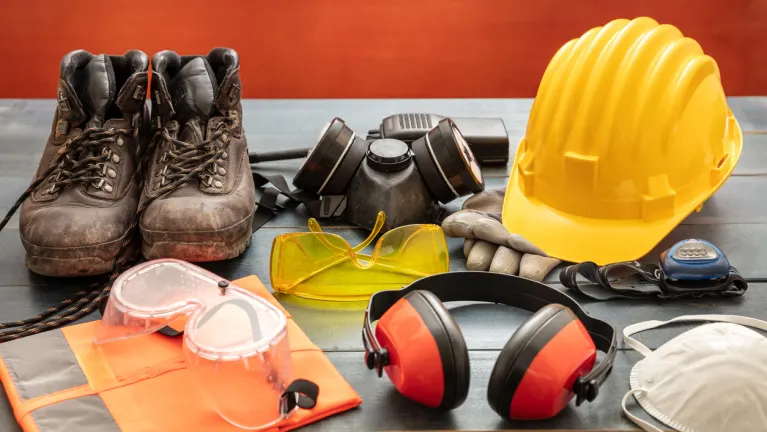
Because of the risk of exposure to hazardous chemicals, the company required most employees to wear uniforms, with some employees also needing safety shoes, respirators and hard hats. The company gave workers a five-minute grace period to change clothes at the start of a shift, and a 10-minute grace period after the shift ended to change clothes and shower, according to court documents.

Activities before or after the workday that are an "integral and indispensable part of the principal activities" are compensable under the FLSA, the U.S. District Court for the Eastern District in Pennsylvania noted in an August 2021 opinion.

East Penn agreed that the time spent donning safety gear, shedding gear and showering is compensable under the FLSA, but it disputed that it was legally required to compensate for the actual time spent on those tasks. It claimed the difference between what it considered a reasonable amount of time and the actual amount of time spent by workers was de minimis, or so small it can be disregarded by law. The DOL maintained the company must pay for the actual time spent on those tasks at the worksite.

However, "where employees have the option to change into required gear at home, the DOL has taken the position that time spent changing into that gear is not compensable, even if the employee chooses to change at work," said Robert Pritchard, an attorney with Littler in Pittsburgh.

"Defining, identifying and capturing all time worked for purposes of minimum wage and overtime laws is seldom as easy as it sounds. That's particularly true at a time when, in many industries, the very concept of the workplace and workday is quickly evolving and changing in ways that are more flexible and less rigid," said Kevin Young, an attorney with Seyfarth in Atlanta.

Practical Tips

Employers should keep accurate time records and pay for actual work hours, rather than scheduled shifts, said William deMeza, an attorney with Holland & Knight in Tampa, Fla. "If the safety equipment is required for performance of the job, and there is meaningful time spent putting it on and taking it off, employees should be required to clock in before putting it on and clock out after taking it off," he said. "Meaningful time is hard to define, but one or two minutes per day likely would not be found compensable."

Even small tasks can be considered integral to the job. "For example, sharpening knives has been found an integral and indispensable activity for meat cutters, but going through post-shift security screenings to detect theft were found not to be integral and indispensable to Amazon warehouse workers' jobs," deMeza explained.

To avoid overtime payments, an employer could shorten the time the employee is engaged in productive work, so donning and removing gear can be completed within the eight-hour workday, Pritchard said.

Clear communication to employees can help prevent compensation mistakes. "This includes messaging on the importance of accurately recording work hours, how work time must be recorded, clear-cut expectations about not working off the clock, and well-established, effective avenues for reporting related concerns up the chain," Young said.

FEDERAL JURY FINDS EAST PENN MANUFACTURING VIOLATED FEDERAL LAW; AWARDS $22M IN BACK WAGES, AMONG LARGEST WAGE VERDICTS IN DEPARTMENT OF LABOR HISTORY

 https://www.dol.gov/newsroom/releases/whd/whd20230510

News Release

FEDERAL JURY FINDS EAST PENN MANUFACTURING VIOLATED FEDERAL LAW; AWARDS $22M IN BACK WAGES, AMONG LARGEST WAGE VERDICTS IN DEPARTMENT OF LABOR HISTORY

Department of Labor finds company denied over 7.5K workers overtime; will seek damages

PHILADELPHIA – A federal court jury has awarded back wages of more than $22 million to the U.S. Department of Labor for more than 7,500 employees working for East Penn Manufacturing Company Inc. — one of the world’s largest battery manufacturers — after the department proved that the company failed to pay them overtime pay.

The award by the 12-member jury marks the largest recorded verdict under the Fair Labor Standards Act obtained by the department, which intends to ask the U.S. District Court for the Eastern District of Pennsylvania to award an equal amount in liquidated damages for the affected workers. The department will also seek an injunction requiring future FLSA compliance by the Lyons Station, Pennsylvania, manufacturer.

In an earlier summary judgment ruling, the court found that East Penn violated the FLSA’s overtime requirement by failing to pay uniformed workers for all actual working time.

A 30-day trial ended when the jury found that the battery manufacturer was required to pay the affected workers for all of their working time, resulting in overtime violations. Typically, East Penn paid workers only for their 8-hour scheduled shift. The employer did not pay for additional time employees needed to put on and remove protective equipment and to shower to avoid the dangers of lead exposure and other hazards. Federal law requires employers to include all hours employees worked and to pay an overtime premium for hours over 40 in a workweek.

This historic jury award follows a 2016 investigation by the department’s Wage and Hour Division and subsequent litigation by its Office of the Solicitor.

“This verdict of more than $22 million is a long-overdue victory for more than 7,500 workers at East Penn Manufacturing,” said Principal Deputy Wage and Hour Administrator Jessica Looman. “Federal law requires employers to pay workers for the hours they work, including time these workers needed to protect themselves from dangerous workplace hazards.”

The verdict ends a trial in response to the department’s March 2018 complaint against East Penn Manufacturing in federal district court. During the trial, the department presented the following evidence:

  • Testimony from 39 employees confirming they and other co-workers performed unpaid work.
  • A witness who had performed a time study and provided testimony on the estimated time employees spent on this work.
  • Testimony from a witness who calculated back wages due and how much time the employer shaved from its employees’ time punches.
  • Volumes of employer time records that showed East Penn did not pay employees based on their actual clock-in and clock-out times. The records also showed how the company would adjust times to pay employees only for their scheduled shift, and how East Penn did this every day and for every employee.

“Decades of settled law states that employers must pay employees for all hours worked, and this includes the time employees spend changing into and out of uniforms and showering where such activities, as here, were necessary and indispensable to their work. Contrary to the law, East Penn allowed employees to work off-the-clock for years,” said Solicitor of Labor Seema Nanda. “The jury’s verdict will go a long way towards making the employees whole and serves as a stark reminder for employers like East Penn to think twice before instituting policies designed to skirt the law.”

The division’s Wilkes-Barre District Office conducted the investigation. Regional Solicitor Oscar Hampton and trial attorneys Elizabeth Kuschel and Alexander Gosfield in the department’s Regional Solicitor’s Office in Philadelphia litigated and tried the case.

Founded in 1946, East Penn Manufacturing Company Inc. is one of the world’s largest battery manufacturers. The company designs, manufactures, distributes its products and recycles more than 30,000 batteries daily in Berks County, Pennsylvania. It also maintains a distribution network in the U.S. and Canada with nearly 90 warehouses and fulfillment centers and about 750 tractors, trucks and trailers.

For more information about the FLSA and other laws the division enforces, contact its toll-free helpline at 866-4US-WAGE (487-9243). Learn more about the Wage and Hour Division, including a search tool to use if you think you may be owed back wages collected by the division. Workers can call the Wage and Hour Division confidentially with questions or concerns – regardless of where you are from – and the department can speak with callers in more than 200 languages. Help ensure hours worked and pay are accurate by downloading the department’s Android and iOS Timesheet App for free.

Julie A. Su, Acting Secretary of Labor, U.S. Department of Labor v. East Penn Manufacturing Company Inc.

Civil Action No. 5:18-cv-01194-GEKP

Agency
 
Wage and Hour Division
Date
 
May 10, 2023
Release Number
 
23-950-NAT

2023년 6월 8일 목요일

DEPARTMENT OF LABOR OBTAINS JUDGMENT IN RECOVERY OF $650K FOR 26 DRIVERS MISCLASSIFIED AS INDEPENDENT CONTRACTORS BY ROMERO’S FOOD PRODUCTS INC

 https://www.dol.gov/newsroom/releases/whd/whd20230607

DEPARTMENT OF LABOR OBTAINS JUDGMENT IN RECOVERY OF $650K FOR 26 DRIVERS MISCLASSIFIED AS INDEPENDENT CONTRACTORS BY ROMERO’S FOOD PRODUCTS INC.

Food manufacturer denied employees overtime wages, other worker rights, protections

SANTA FE SPRINGS, CA – The U.S. Department of Labor has obtained a consent judgment as part of its efforts to recover $650,000 in unpaid overtime wages for 26 delivery drivers of a Santa Fe Springs food manufacturer that misclassified them as independent contractors exempt from overtime.

The action by the U.S. District Court for the Central District of California requires Romero’s Food Products Inc. to pay back wages to the affected employees. The court also forbid the company permanently from future Fair Labor Standards Act violations and prohibited Romero from employing any worker for more than 40 hours in a workweek without paying them required overtime pay. The court entered the judgment in April 2023.

The department’s litigation follows an investigation by the department’s Wage and Hour Division that found that, by misclassifying the drivers as independent contractors, Romero’s Food Products denied them the overtime rate required for hours over 40 in a workweek. The company employed the drivers to distribute its products to Walmart, Costco, Albertson’s, Stater Bros. Markets and other retail grocery outlets. Romero’s also failed to maintain accurate employee records.

“Combating employee misclassification continues to be a U.S. Department of Labor priority,” explained Wage and Hour Division Assistant District Director Gayane Aleksanian in West Covina, California. “Employers cannot illegally pay delivery drivers as independent contractors and defend the violation as a common industry practice. Misclassifying employees deprives workers of their basic rights under labor law.”   

Investigators also found Romero’s Food Products forced many workers to enter into agreements to handle possible labor disputes outside of court.

“These types of agreements create significant barriers for workers seeking to recover their wages,” said Regional Solicitor Marc Pilotin in San Francisco. “We are determined to help workers recover their full earnings, including for employees bound by mandatory arbitration clauses.”

Founded in 1968, Romero’s Food Products Inc. manufactures, sells and distributes a line of Mexican-style food products throughout North America, Asia and Europe.

The division’s West Covina District Office conducted the investigation. The department’s Regional Solicitor’s Office in San Francisco filed a complaint and obtained the consent judgment on the case.

Learn more about the Wage and Hour Division, including a search tool to use if you think you may be owed back wages collected by the division. Employers and workers can call the division confidentially with questions, regardless of where they are from. The department can speak with callers in more than 200 languages through the agency’s toll-free helpline at 866-4US-WAGE (487-9243). Download the agency’s new Timesheet App for iOS and Android devices – free and now available in Spanish – to track hours and pay.

Julie A. Su, acting Secretary of Labor, U.S. Department of Labor vs. Romero’s Food Products Inc.

Case 2:23-cv-02892-FLA-PVC

2023년 6월 3일 토요일

연방대법 “노조 파업에 따른 손실 소송 가능”

 http://www.koreatimes.com/article/20230602/1467817

연방대법 “노조 파업에 따른 손실 소송 가능”