캘리포니아 주의회가 의류^봉제 업계에 만연해 있는 최저임금 미지급 및 임금 규정 위반 등 노동법 위반을 근절하기 위해 강력한 ‘봉제 노동자 보호법안’(Garment Worker Protection Act, SB 1399)을 추진하고 있어 관련 업계에 큰 파장이 예상된다.
이 법안은 원청 의류업체는 물론 최상위 리테일러까지 하청업체의 노동법 위반에 대해 연대 책임을 지도록 강화하고 봉제업체의 피스당 성과급 제도를 폐지하도록 하는 내용을 골자로 하고 있으며, 지난 6월 이미 주 상원을 통과한 뒤 현재 주 하원에서 심의가 이뤄지고 있다.
17일 LA타임스는 SB 1399법안이 LA 의류업계에 큰 변화를 몰고 올 것으로 보여 이 법안 제정을 놓고 노동계와 관련 의류업계의 찬반 논쟁이 치열하게 전개되고 있다며, 특히 한인 자바업계의 사례 등을 들며 상세히 보도했다.
이 법안은 봉제업계에서 관행처럼 시행되고 있는 종업원들에 대한 성과급 제도를 전면 금지하고, 원청업체와 최종 리테일러 대기업들까지 하청업체의 임금 착취 및 노동법 위반 사항에 대해 연대책임을 지도록 하고 있어 임금착취 방지를 위해 지난 1999년 제정된 AB 633 주법보다 훨씬 더 강력한 내용을 담고 있다.
현재 시행 중인 AB 633법은 엘몬티에서 타이계 봉제노동자 수십여명이 열악한 환경 속에서 임금착취 노동에 시달렸던 사건이 계기가 돼 제정됐지만, 유통업체와 의류제조 업체들에게 하청업체의 임금 착취 책임을 묻지 않아 그간 많은 의류업체들이 이 법의 맹점을 악용해 봉제 노동자들의 임금 절도를 사실상 묵인하거나 방조해왔다고 LA타임스는 지적했다.
이 법안이 시행되면, 의류브랜드를 가진 원청업체나 대형 유통업체들 즉 유명 의류브랜드를 가진 소매업체들도 과급을 지급하는 하청업체의 임금 착취에 대해 최종 책임을 지게 되며, 봉제업계가 최저임금 지급 회피를 위해 편법적으로 활용하고 있는 도급 계약이 불법화된다.
도급 계약은 원청업체가 하청업체나 봉제노동자들과의 계약을 통해 시간당 임금 대신 제조한 의류 개수에 따라 임금을 지급하는 성과급을 지급하는 계약이다.
현재 LA 다운타운을 포함해 남가주 지역 봉제업계에는 약 4만5,000여명의 종업원들이 봉제공장에서 일하고 있으나 대부분 최저임금을 지급받지 못하고 있다고 신문은 전했다.
현재 LA시의 최저임금은 시간당 14달러25센트이지만 하루 12시간씩 주당 70시간까지 일하고 있는 봉제노동자들의 시간당 평균 임금은 5달러15센트에 불과해 법정 최저임금의 ⅓ 수준에 그치고 있다는 것이다.
1999년 제정된 AB 633 법에도 하청업체의 임금 착취에 대해 원청업체의 책임을 묻는 조항이 있지만 일부 패션 브랜드와 의류 소매업체들이 하청업체와의 도급계약을 통해 사실상 이 조항은 무력화된 상태라는 것이 노동법 전문가들의 지적이다.
실제로 연방 노동부는 지난 2015년과 2016년 77개 의류 매장에 대한 불시 점검에서 85%의 업체들에서 임금 위반을 적발했지만 상황이 더 나아 지지 않았다는 것이 노동단체 등 SB 1399 지지자들의 주장이다.
하지만 이 법안의 적용범위가 너무 광범위해 실제 이 법안이 시행되면 의류업계들이 버티지 못할 수 있다는 법안 반대자들의 주장도 만만치 않다. SB 1399 법안이 실제 시행되면 LA 다운타운 의류업계를 비롯한 주 전역의 의류관련 산업 기반이 붕괴에 가까운 몰락을 맞게 될 수 있다는 것이다..
제니퍼 바레라 캘리포니아 상공회의소 부회장은 “이 법안이 시행되면 그 어떤 기업도 캘리포니아에서 생산 주문을 하지 않고 타주로 떠나게 될 것”이라며 “임금 착취에는 반대하지만, 이 법안은 캘리포니아 의류업계의 일자리를 모두 사라지게 하는 잡 킬러”라고 성토했다.
그러나 일부 의류업체들은 이 법안이 시행되면 대형 유통업체들이 주문 가격을 후려치는 횡포를 방지할 수 있을 것이라며 반기고 있다고 신문은 전했다.
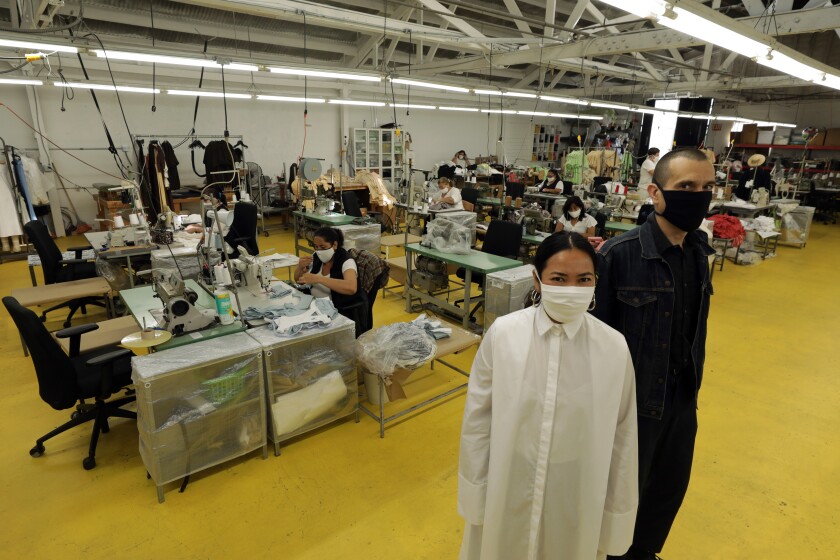
Alnea Farahbella, left, and husband Arno Nabos, who own the small apparel factory Nana Atelier in Los Angeles, support SB 1399, a bill that would ban piece-rate compensation and make retailers jointly liable for any labor violations in the making of their clothes.
The prices are hard to believe: $24.99 for an on-trend dress, delivered to your door; $9.99 for a silky camisole hanging from the rack at a discount chain.
But someone has to pay the real cost of those cheap clothes even if it’s not the American consumer, say labor advocates — who point to the thousands of immigrant workers who can sometimes toil for far less than the minimum wage in small Los Angeles apparel factories.
Now, those advocates are proposing the industry’s biggest reforms in a generation, legislation that would turn the traditional pay structure on its head while holding online shops such as Fashion Nova and other retailers including Nordstrom responsible for any wage theft that occurs in the making of their apparel.
“If your clothes are being produced in an unlawful condition, you are going to share responsibility, period,” said Dana Hadl, a directing attorney at Bet Tzedek, a Los Angeles nonprofit that provides free legal counsel to workers and drafted the legislation.
The bill, SB 1399, is so far-reaching that it’s being labeled by critics as an existential threat to what remains of the region’s once-booming apparel industry, which has shrunk to roughly 45,000 workers after decades of competition from cheap foreign labor. More than a dozen business groups have lined up against it, including the industry’s trade association, the California Chamber of Commerce and the California Retailers Assn.
Opposition, though, is not uniform as some high-profile L.A.-area companies are backing the bill, including Reformation, which markets eco-friendly women’s wear and has a celebrity clientele, and Fashion Nova, the popular fast-fashion retailer, which has been accused of turning a blind eye to wage theft but recently announced changes to its contracting practices.
Critics say SB 1399 is an existential threat to what remains of the region’s once booming apparel industry, which has shrunk to roughly 45,000 workers from a peak of about 150,000.
(Claire Hannah Collins / Los Angeles Times)
The proposed reforms follow those enacted in 1999, four years after 72 undocumented Thai workers were found virtually enslaved in an El Monte apartment complex, stitching together clothing behind barbed wire. That legislation made garment manufacturers liable for wage violations by the contractors who cut, sew and otherwise produce their garments.
But in the decades since, worker advocates say that some fashion brands and retailers that carry their own clothing lines have found ways to skirt the law by employing layers of subcontracting between them and the small factories that actually produce apparel. Random inspections of 77 garment shops conducted in 2015 and 2016 by the U.S. Department of Labor’s Wage and Hour Division found wage violations at 85% of them. Advocates say the situation hasn’t gotten any better, with many undocumented Latino immigrants afraid to file wage claims over fears of deportation.
A 2016 state law, which applied to multiple fields, tightened up regulations on piece-rate compensation, which is traditional in the apparel industry and pays workers for every hem, seam and cuff they sew. That law mandated paid rest and recovery time and required more detailed payroll records.
The piece rate can allow skilled workers to well exceed the minimum wage, but labor advocates say the rates are often set so low that apparel workers can make less than $5 an hour — even though employers are supposed to make up the difference and pay the legal minimum in such instances. SB 1399, which has passed the Senate and is expected to be heard by the Assembly Appropriations Committee this week, would require employers to pay an hourly wage and only allows piece-rate compensation as an incentive bonus, unless provided for in a collective bargaining agreement.
The combination of creating more stringent liability for wage theft and banning the piece rate has opponents saying the reforms will finish off much of what is left of L.A.'s apparel industry, which once employed some 150,000 workers before liberalized trade with Mexico, Central America and Asia sent clothing assembly out of the country.
“This is a huge overhaul of the entire industry,” said Jennifer Barrera, executive vice president of the California Chamber of Commerce, which has labeled the bill a “job killer,” though she acknowledged there was “no question” labor abuses occur in the industry. “You incentivize companies to basically say, ‘I am not going to contract anymore in California. I can go elsewhere and not be exposed to this type of litigation.’”
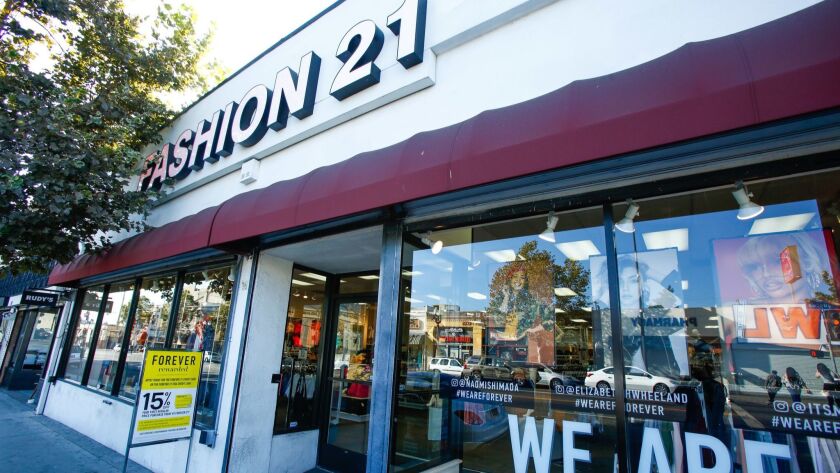
The first Forever 21 store opened in 1984 on Figueroa Street in Highland Park. The company was then called Fashion 21.
(Claire Hannah Collins / Los Angeles Times)
Labor advocates say the rise of fast-fashion retailers such as Forever 21 has contributed to the problem. The L.A. company had been the poster child for alleged wage abuses before it faltered and filed for bankruptcy last year. The Los Angeles Times documented in 2017 how the company had been cited in nearly 300 claims since 2007 by workers demanding back pay for producing its clothing, yet Forever 21 had not paid anything because it was classified as a retailer.
More recently, labor advocates have been critical of Fashion Nova, one of the local industry’s rising stars — and were stunned to hear it had decided to support the proposed reforms. The largely online retailer has skyrocketed to prominence on its $22.99 skin-tight jumpsuits, $19.99 tops and other affordable apparel embraced by a legion of Instagram influencers. It’s also partnered with celebrities such as rapper Cardi B on clothing lines.
The company’s business model relies on rapidly churning out apparel that may be in style for only a short time. That favors making clothes locally even if production costs might be higher than overseas — but critics charge that has led to abuses given the low price tags. An expose in the New York Times in December alleged wage theft at small subcontractors that was similar to what workers suffered making clothes for Forever 21.
Opponents contend the two companies are outliers and do not represent the practices of the L.A. apparel industry, where the use of subcontractors to assemble apparel has long been standard. They are calling for better enforcement of existing laws.
Garment workers rally in downtown Los Angeles in 2016 to demand an end to wage theft and unsafe working conditions.
(Los Angeles Times)
“This new law is all-encompassing, and it paints the whole industry as a bad apple — that is my problem. We are not all Fashion Nova and Forever 21,” said Ilse Metchek, president of the California Fashion Assn. trade group, who fears big chains such as Nordstrom and other retailers will stop contracting for apparel in the state. “You are picking the worst of the worst.”
Fashion Nova declined to comment on Metchek’s remarks but has announced reforms of its contracting practices. That includes a mandate that its contractors and subcontractors agree to random independent audits and that their workers are paid the applicable minimum wage, which in Los Angeles rises to $15 an hour for employers of all size next July.
It is also establishing a toll-free hotline for workers to report abuses and has instituted an escalating system of penalties for violators of its agreements. The company said it recently suspended 10 vendors that refused to submit to third-party audits. Fashion Nova would not comment on what percentage of its clothing it continues to make in Los Angeles, but it did say it continues to work with more than 50 local vendors.
“Fashion Nova continues to support the various steps taken by government agencies and factories towards improving working conditions for garment workers, including the latest legislation proposed with SB 1399,” the company said in a statement to The Times.
Surprised labor advocates speculate the company wants to avoid more negative publicity but applauded the decision and called on other apparel makers to join it. “We’re certain both business and workers can thrive under SB 1399,” the sponsors said in a statement.
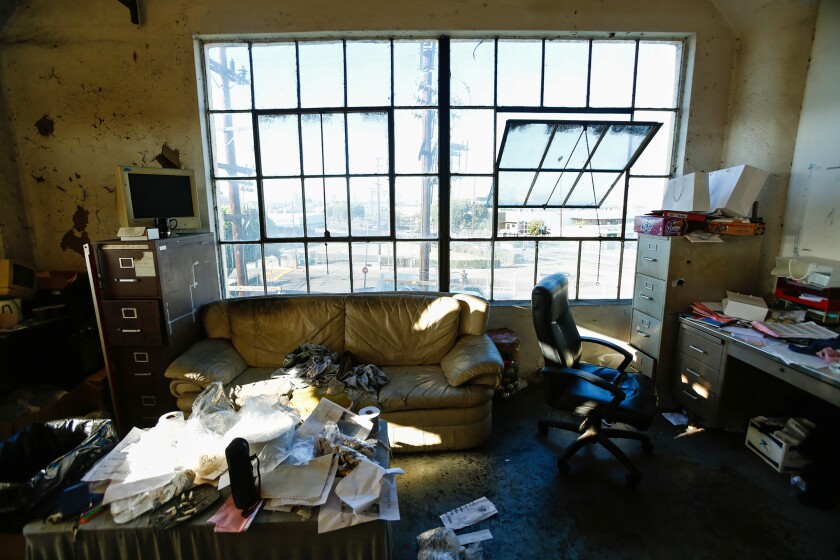
An office of a sewing factory in downtown Los Angeles. The owner says he cannot afford to pay workers the minimum wage.
(Claire Hannah Collins / Los Angeles Times)
Worker advocates maintain that wage theft goes beyond a handful of retailers and is common in the industry, and the new reforms would fix shortcomings in the original 1999 legislation that have allowed some apparel makers to evade it.
“We would not have clamoring by these garment workers who say the piece rate is used to exploit them if in fact they were making much more money,” said the bill’s author, state Sen. Maria Elena Durazo (D-Los Angeles), who heard workers’ testimony last year chairing an oversight hearing on a wage-restitution fund for apparel workers.
The hearing prompted her to seek proposed reforms from worker advocates, which were distilled into the bill. SB 1399 creates a new category of companies called “brand guarantors” that would be “jointly and severally” liable for any wage theft in the production of clothing. That would make retailers that contract to have clothing made for them responsible for a wage violation even if it was committed by an apparel shop hired by its manufacturing contractor, something advocates say is very difficult to do now and relatively rare.
Critics say that joint liability for third-party violations would make “any person or entity in the clothing industry” liable, including dry cleaners, personal shoppers and secondhand retailers, according to a letter of opposition by the California Chamber of Commerce signed by 18 other groups.
Hadl said the criticisms are wild exaggerations intended to confuse legislators. She said the bill only creates liability for entities that contract to have clothes made in California, such as a retailer that hires apparel companies to produce clothing to its specifications for its private labels.
Lil Nas X performs at Fashion Nova Presents: Party With Cardi at the Hollywood Palladium in May 2019.
(Jerritt Clark / Getty Images for Fashion Nova)
That provision would capture virtually all the clothing sold at a retailer such as Fashion Nova, advocates say, but only some of the apparel sold by department stores or discount chains that carry myriad merchandise, including outside brands.
“Somebody who buys finished goods who has not had any input into their production is not going to be held liable. Target says, ‘We want to buy 50,000 Nike T-shirts of the L.A. Rams’ — it doesn’t meet the criteria,” Hadl said.
Bill advocates say joint liability is crucial in ensuring there are large entities on the hook able to pay wage claims. It would also encourage brands and retailers to pay more to have their clothes made and step up their monitoring of the region’s small subcontractors, which cut, sew and finish garments and are often owned by Korean immigrants. They say monitoring has fallen off over the years.
“The workers at the bottom are the ones left holding the bag because the most capitalized and the biggest companies are the ones at the top. At the bottom are the direct employers of the workers who are fly-by-night or disappear or are judgment-proof or transfer ownership to the brother or cousin or uncle or whoever,” said Matthew DeCarolis, another Bet Tzedek attorney.
The Garment Worker Center, a bill sponsor that provides services to apparel workers in downtown Los Angeles, has been helping Santa, a 36-year-old undocumented worker, deal with just such a situation. The woman, who asked that her surname not be disclosed because of her immigration status, said she typically worked 65 to 70 hours a week at a factory on East 60th Street in Los Angeles for $300 to $325, less than $5 an hour depending on the week.
Her claim lists three employers at that address, including Chung Dress and its owner Sane Chung. She provided labels in her wage claim indicating she made clothes for Frame, a new upscale lifestyle brand in Culver City, and Good American, a “body positivity” brand co-founded by Khloe Kardashian that sells casual clothing for women of all sizes.
Chung denied to The Times that the woman was the victim of wage theft and said the complaint was retaliation for being laid off when work slowed. He also said she worked not for him but for a third company — a subcontractor he used when Chung Dress had more work than it could handle but that dissolved after the work ran out. It was run by a friend who sublet space. Chung said he had submitted payroll records to the state that back up his innocence.
“I understand there are a lot of employers that, you know, do shady things, that don’t pay well, but what happens to the people like me? I’m fair. I did everything the right way and I still get dinged,” he said.
Labor advocates say thousands of immigrant workers can sometimes toil for far less than the minimum wage in small Los Angeles apparel factories, such as the one above on South Hill Street.
(Brian van der Brug/Los Angeles Times)
Frame issued a statement that it is “committed to the highest ethical standards” and works “diligently to ensure that each factory we work with complies with these regulations through our agreements.” It also said it had no knowledge of the third-party wage claim and could not comment on it. Good American did not respond to repeated emails for comment.
It’s also possible to try to hold retailers liable for wage violations at garment factories by proving that a purchase order was put out at a cost that could not possibly be met without shortchanging workers.
David Weil, who oversaw a federal crackdown on the industry while serving as the administrator of the U.S. Department of Labor’s Wage and Hour Division during the Obama administration, said his agency attempted to do just that toward the end of his term.
“We worked the problem from the ground up. We found out how many minutes it would take to make different items, therefore the wages that would need to be paid for that given some reasonable rate of return and the cost of materials,” he said. “It was a heavy lift.”
The division found contractors received just 73% of the price needed in order to ensure that workers could receive a bare minimum legal wage.
Randy Youngblood, a prominent industry figure who operates Apparel Resources, a Yorba Linda company that monitors contractor compliance for apparel manufacturers, said he supports abolishing the piece rate.
“I am not a proponent of piece rate work in 98% of the garment factories in California. As a time-study engineer, it’s a real science. You need to be on the shop floor checking rates with a stopwatch,” said Youngblood, whose high-end clients include jeans maker Paige and women’s apparel designer Karen Kane.
“If an operator has trouble making the rate, you need to be able to show her where she or he are losing time and how they can pick that time up. The bulk of the sewing contractors we deal with don’t have that level of sophistication,” he said.
Richard Cho, president of the Korean Apparel Manufacturers Assn., which represents hundreds of companies that make clothes for brands and retailers, said an hourly minimum would wipe out the remaining manufacturers that make inexpensive clothes for big discount chains.
“We are not even running small businesses. We are running micro businesses,” he said. Those that could survive it are moving into the “better boutique market,” where higher-quality clothes are sold at a premium.
Still, he doesn’t outright oppose the bill, noting that making retailers responsible for labor violations of subcontractors could help his membership. “Why is it that the [liability] doesn’t go all the way up to the one that has written the bad purchase order? Why does it always have to end with the contractor or the manufacturers?” he said. “That is not fair.”
Nana Atelier, a small manufacturer in Boyle Heights that opened two and a half years ago, was one of the few apparel companies that has sent a letter in support of the bill to legislators.
Co-owners Alnea Farahbella and her husband have their own upscale women’s fashion brand and make clothes for other high-end brands, including New York designer Rachel Comey, in a brightly lit factory with a cheery, yellow floor. She candidly admits the couple’s own brand, Toit Volant, is subsidizing the company, which pays its workers an hourly wage.
That compensation model raises costs, but she believes the company will eventually turn a profit. Farahbella said that as the factory’s reputation has grown, the couple has turned down lowball offers for work.
“We get approached all the time by brands that are selling garments at retail for $400. They are like, ‘We want to pay $20 for this,’” she recounted. “‘You want to pay $20 for your cutting, your sewing, your fabric and you want to sell it for $200 for yourself, and then the retailer will sell it for $400?
“‘You can’t come to us,’” is her reply. “‘We are not desperate.'"
▶ “가뜩이나 힘든데 시행땐 30~40% 임금 오르는 셈” ‘원청- 하청 중간’ 한인업체 피해 여전할 것 우려도
임금 지급 방식과 하청업체 노동법 위반에 대한 원청업체의 책임을 강화한 SB1399법안이 가주 상원을 통과해 관련업계들이 긴장하며 추이를 주시하고 있다. 한 봉제공장의 모습. [로이터]
“이제 더 이상 LA에서 의류업을 못하는 상황이 올지도 모른다.”
캘리포니아주 상원을 통과한 소위 ‘봉제노동자 보호법안’인 SB1399 법안이 이번 주부터 하원세출위원회에서 법안 심의에 들어간다는 소식을 접한 한인 봉제업계와 의류업계는 법안의 최종 통과 여부를 확인할 만큼 민감하게 반응하고 있다.
그만큼 이 법안의 무게감이 다른 노동 관련법과 상당한 차이가 있음을 그대로 보여주는 방증이다.
무엇보다 SB1399 법안은 봉제업계에서 관행처럼 자리잡고 있는 임금 관련 체계에 근본적인 변화가 있을 것으로 업계는 전망하고 있다. 그 동안 봉제업계에게는 ‘피스 레이트(piece-rate)’라는 임금 적용방식이 전통적으로 적용되어 온 게 사실이다.
작업한 의류 1장당으로 임금을 계산할 경우 해당 근로자가 받는 평균 임금 수준은 시간당 5.15달러로 파악되고 있다. 현재 LA 시와 카운티의 최저 임금에 턱없이 모자라는 금액이다.
원래 봉제업계에서는 피스 레이트는 일종의 보너스 개념으로 직원들의 동기 부여를 위해 만들어진 것이었으나 임금 착취의 수단으로 변질되어 수년 전부터 개선의 요구가 높았다.
SB1399 법안이 통과되면 봉제업계는 피스 레이트 임금 지급 방식에서 시간당 임금 지급 방식으로 개선해야 한다. 봉제업계 관계자들에 따르면 시간당 임금 지급 방식이 도입되면 30~40% 정도의 임금 인상 부담을 업주들이 고스란히 떠안게 돼 경비 상승 요인이 될 것으로 보인다.
여기에 시간당 임금 지급 방식이 적용되면 타임카드 작성과 관리를 해야 하는 의무도 업주의 몫이 된다.
김해원 노동법 변호사는 “법안이 통과되면 시간당 임금을 지불해야 하니 지금까지 타임카드 페이스 텁을 갖추지 않았던 업체들도 반드시 노동법을 준수를 할 수밖에 없는 상황에 놓이게 될 것”이라고 전망했다.
가뜩이나 사양 산업으로 분류되고 있는 봉제업계에게는 SB1399 법안은 치명타일 수 밖에 없다.
이뿐만이 아니다 하청업자가 임금 체불 등 노동법 조항을 위반했을 경우 원청업자에게도 책임을 묻는 AB 633을 더욱 강화하는 내용도 담고 있다. 이 부분과 관련해서는 특히 한인 의류업계에서는 반발과 함께 실효성에 의문을 제기하고 있다.
원청업체와 하청업체 사이에 중간 하청업체로 한인 의류업체들이 많은 현실에서 원청업체인 주류업체는 법망을 피하는 반면 한인 업체들이 피해를 보는 경우가 과연 시정될 수 있겠느냐는 의구심이다.
하지만 현재 SB1399 법안이 통과되더라도 별다른 대안이 없다는 게 한인 관련업계의 고민이다. 의류 생산을 네바다나 텍사스 등 타주로 이동하거나 아니면 베트남이나 미얀마 등 동남아시아로 옮길 수는 있지만 당장 내년도 판매 제품이 걱정이다.
한 여성복 전문 판매업체 업주는 “이번 법안의 후폭풍은 매우 클 것으로 예상된다”며 “앞으로 가주에서 의류 생산은 생각도 하지 못하는 상황에 직면할 수 있다는 생각이 든다”고 말했다.
얼마 전 한국에서 온 지 얼마 안 되는 사업가를 만났다. 그는 LA에서 만난 사업 파트너들로부터 노동법 소송을 당했다고 했다. 표현은 다소 거칠었다. 이 사업가는 “검은 머리 교포 사기꾼들에게 당했다”고 분노했다. 그런데 원고 측을 만나니까 이들은 오히려 “한국서 온 사기꾼에게 노동착취를 당했다”고 목소리를 높였다.
의아했다. 소송을 제기한 LA의 파트너들은 대부분 박사 학위자들이었다. 피고 측 변론을 위해 조사를 해보니 고학력 치고는 업무 능력이 너무 떨어져 보였다. 왜 피고가 이런 이들과 사업 파트너를 했는지 의문이 들었다.
최근 부쩍 늘고 있는 부당해고 소송을 당하는 클라이언트(업주)에게 왜 직원을 해고 했는지 물어본다. 대개 업주 측은 취업 인터뷰 당시 밝혔던 경력에 비해 막상 그 직원을 고용했더니 그만큼의 실력에 못 미친다는 것이다. 그러면 두번째 질문을 한다. “왜 이력서에 나와있는 전 직장에 확인하지 않았습니까”라고 물으면 “경쟁사라서 그런 질문을 하기 꺼려해서 그랬다”는 대답을 한다. 이처럼 경력과 실력을 포장한 종업원들이 취업한 뒤 정당한 이유로 해고당하고 나서도 부당해고 소송을 하는 경우가 다수 있어 고용주는 신중하게 직원을 뽑아야 한다.
최근 한국에서는 미국 출신의 유명 한인 유튜버 부부의 정체가 드러나 화제가 되고 있다. 아직도 한국에는 신정아 수준의 사기극이 통한다. 그들 때문에 또 한번 검은 머리 미국인의 오명이 한국에서 거론될까 봐 걱정이다. 실리콘밸리에서도 사기꾼이 통한다. 테라노스의 엘리자베스 홈스는 여자 스티브 잡스에서 글로벌 사기꾼으로 전락한 예다. 그런데 최근 한국을 비롯한 전세계에서 코로나19 백신을 개발했다고 홍보하면서 주가 작전을 펴는 바이오 기업들이 다수 나오고 있다. 이밖에도 엉터리 마스크를 비싼 가격에 판매하는 회사들이 등장했다가 사라지는 경우도 많이 있었다.
반면 SNS나 언론을 통해 소비자와 시청자를 우롱하는 사기꾼 대신 조용하게 자기 일만 열심히 하고 있는 진짜 한인 영웅들이 등장하고 있다.
지난 3월 오리건 대학병원의 에스더 주 박사는 소셜네트워크에 ‘#GetMePPE’‘ 해시 태그를 통해 의료 업계 종사자들에게 마스크, 장갑, 가운, 고글 등 개인보호장비(PPE)를 지원해달라고 도움을 호소해 화제가 됐다. 피츠버그 의과대학에서는 한인 연구원을 포함한 연구진이 코로나19 백신 개발연구를 하고 있고, 미 전국의 병원에서 이름이 알려지지 않은 수많은 한인 의료진들이 감염의 위험을 무릅쓰고 최전선에서 활약하고 있다. 하와이주 보건국의 전염병학 담당학자인 사라 박 박사, 플로리다주 피넬라스 카운티 보건국의 디렉터인 최유리 전염병 박사, 조나단 김 에모리 대학 스포츠 심장학과장, 스티븐 최 예일의대 부학장 등도 마찬가지다.
한인언론에 나오는 인물들이 진부하거나 문제가 있다는 것은 아니다. 다만 정말 능력 있고 성공한 사람들은 언론에 절대로 노출되지 않으려고 엄청 관리를 한다.
이제는 주류사회에서 활동하고 있는 검증된 한인들, 특히 커뮤니티에 롤모델이 될 만한 2, 3세들을 한인언론들이 조용히 열심히 소개할 때가 됐다고 본다.
14일 LA데일리뉴스는 “재택근무로 전환하더라도 직원이 업무를 수행하는데 필요한 비용은 지원해줘야 한다”고 보도했다.
이 신문은 한 예로 “직원이 집에서 일을 할때 인터넷을 사용한다면 그 비용의 일부를 지급해줘야 한다”며 “고용주는 이러한 사항을 우습게 봤다가는 노동법 위반으로 소송을 당할 수 있다”고 전했다.
실제 한인 업주들도 노동법 변호사들에게 재택근무 관련, 법적 자문을 구하는 경우가 늘고 있다. 변호 업계에 따르면 재택근무와 관련 ▶근무 지침 설정 ▶집에서 일할 때 발생하는 비용에 대한 청구 및 정산 방식 ▶직책 또는 역할에 따라 재택근무 여부를 결정할 경우 차별 문제 ▶재택근무 직원이 코로나19에 감염됐을 경우 ▶데이터 유출을 막기 위한 보안 시스템 제공 ▶휴식 시간 및 오버타임 방침 등이 주요 문의 사항이다. 가주 노동법에 따르면 근무와 직접 연관된 모든 필요 경비는 물론 손해 발생시 고용주는 보상을 해야 한다.
김해원 변호사는 “인터넷, 프린터와 종이 사용, 사무용품 등 비용 정산 항목과 범위를 명확히 해야 소송을 방지할 수 있다”며 “심지어 직원이 재택근무를 하는 지역과 회사가 위치한 곳이 다를 경우 카운티, 시가 정해놓은 노동법에서 차이가 있기 때문에 세부사항도 반드시 확인해야 한다”고 말했다.
엘세군도 지역 항공사 제조 업체서 근무하는 대니얼 김(43·엔지니어)씨는 “우리 회사의 경우 재택근무로 바뀌면서 월 1000달러의 근무 비용이 추가로 지급되고 있다”며 “인터넷, 식사, 사무용품 등의 비용이 다 포함되는 비용”이라고 전했다.
가주 정부가 직장 내 성희롱 예방을 위해 무료 온라인 교육에 나서고 있다. 성희롱 예방 교육 의무화 시기가 내년 1월 1일부터 시행될 것에 대비 업체들의 편의를 제공하기 위함이다.
그동안 현실적인 이유에서 성희롱 예방 의무교육을 실시하지 못하고 있는 많은 한인 업체들이 이번에 시작되는 무료 온라인 교육의 혜택을 볼 것으로 전망되고 있다.
가주공정고용주택국(DFEH)에 따르면 지난 4일부터 직장 내 성희롱 예방 교육 프로그램의 일환으로 임원, 수퍼바이저, 매니저 등 관리자급 직원 대상의 교육 프로그램이 온라인으로 제공되고 있다. 관리자급 교육 프로그램은 2시간짜리다.
DFEH는 이보다 앞서 지난 5월 일반직원용 1시간짜리 성희롱 예방 교육 프로그램을 개발해 제공해 왔다.
케빈 키시 DFEH 국장은 “가주 내 수천명의 직장인들이 이미 무료 온라인 교육을 통해 의무 예방 교육을 성공적으로 이수했다”며 “앞으로 더 많은 업주들이 온라인 교육을 활용해 교육 이수 의무를 이행하기를 기대한다”고 말했다.
DFEH의 성희롱 예방 온라인 교육은 컴퓨터나 스마트폰으로 수강이 가능하다. 컴퓨터 시스템은 인터넷 익스플러11나 구글 크롬 최신버전이어야 하고 맥 시스템일 경우에는 사파리 최신버전이 장착되어 있어야 한다. 스마트폰은 애플 iOS10 이상안드로이드 OS 4.4 이상 버전이면 가능하다.
한번 온라인 교육이 시작되면 중간에 과정을 끊거나 저장했다 다시 시작할 수 없다는 점에 유의해야 한다.
온라인 교육이 끝나면 교육 수료증이 발급되는데 출력이나 저장, 이메일 전송 등이 가능하다.
현재 영어와 스패니시 두 개의 언어로 제작되어 있지만 오는 30일부터 한국어 버전도 서비스될 예정이다.
DFEH 웹사이트(https://www.dfeh.ca.gov/shpt/) 접속하면 온라인 교육 프로그램을 열람할 수 있다.
이번 DFEH의 성희롱 예방 무료 온라인 교육 프로그램은 비용 문제로 예방 교육을 실시하지 못했던 한인 업체들이나 코로나19 사태로 직장 내 사회적 거리두기로 비대면 교육이 필요했던 한인 업체들 모두에게 크게 도움을 줄 것으로 보인다.
문제는 올해 말까지 온라인 교육을 이수해야 하는 교육 시한이 정해져 있다는 것이다.
원래 올해 1월부터 시행될 예정이었다가 1년 유예돼 시행되는 ‘성희롱 예방 교육법’(SB1343)은 2021년 1월 1일까지 5인 이상의 종업원을 둔 업체의 임원, 수퍼바이저, 매니저는 2시간, 일반 직원은 1시간의 교육을 받도록 규정하고 있다.
이후 2년마다 한 번씩 이 교육을 반복해 이수해야 한다. 신입 직원은 채용 6개월 내에 한번 최소한 1시간의 교육을 받아야 하고 그 후에는 2년에 한 번씩 교육을 받으면 된다.
김해원 노동법 변호사는 “DFEH의 온라인 성희롱 예방 교육의 결과는 수료증 형태로 최소한 2년 동안 보관해야 하고, 프린트나 이메일을 통해 직원에게 줄 수 있다”며 “코로나 비대면 시대를 맞아 스패니시나 한국어로도 성희롱 예방교육을 실시할 수 있으니 반드시 이수하고 업소 내에 성희롱 예방 포스터들도 부착해서 성희롱 소송을 미연에 방지해야 한다”고 조언했다.
한편 연방 평등고용기회위원회(EEOC)에 따르면 지난해 접수된 직장 내 성희롱 관련 고발 건이 전체 고발건의 10% 정도 되는 7,514건으로 집계됐으며, 가주에서만 지난해 344건의 성희롱 고발 건이 접수됐다. 이는 텍사스, 플로리다, 조지아, 뉴욕에 이어 5번째로 높은 수치다.