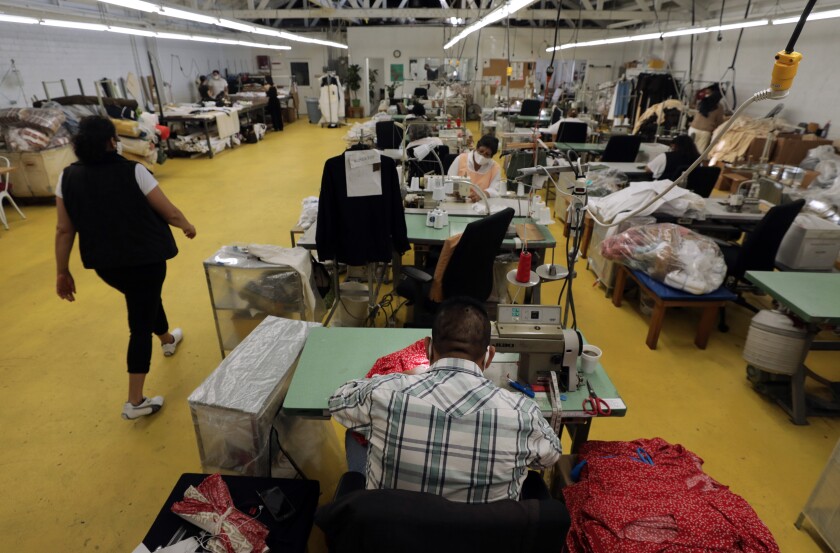
Wage theft is a problem for L.A. garment workers. A California bill aims to fix it. Again
Legislation up for a vote in Sacramento could overhaul the garment industry’s pay model and introduce more accountability into the fashion supply chain.
The garment industry relies on a complex web of contractors and manufacturers to deliver apparel to fashion brands. It’s a setup that lowers costs, but also one that allows fashion brands to escape scrutiny for instances of wage theft and poor working conditions among their suppliers.
A bill on its final lap through the California Legislature aims to overhaul the industry’s pay model and introduce more accountability into the fashion supply chain.
The proposed legislation has split the industry, with many fashion brands and trade groups saying the bill overreaches in placing blame on them for working conditions and wage theft perpetrated largely by third-party contractors. They warn it will shrink an already diminished Los Angeles industry by encouraging companies to tap out-of-state manufacturers. Garment workers and labor advocates maintain that brands sparked a “race to the bottom” in wages and should be held responsible for what they say are some of the worst labor law violations they’ve seen.
“These are the same working conditions of 100 years ago in New York City today in L.A. We’re not going to allow that to happen. California is a much better state than that,” said state Sen. María Elena Durazo (D-Los Angeles) who wrote the bill, SB 62.
The bill, passed by the Senate, is expected to reach the Assembly floor by next week. The legislation is a reincarnation of a bill that died last year when, amid the pandemic, lawmakers failed to call it for a vote before the midnight deadline.
Marissa Nuncio, the director of downtown L.A.’s Garment Worker Center, which is co-sponsoring SB 62, said she’s confident about getting the bill through the Assembly, but recognizes the significant opposition. “Every time you’re trying to tilt the balance of power in an industry, it’s going to be controversial.... But it’s untenable to continue this way.”
If approved, SB 62 would require apparel factories to pay garment workers an hourly wage, abolishing the practice of paying per piece produced, with the exception of using output as an incentive bonus. It also would expand fashion brands’ and retailers’ liability for wage theft, even if workers were shortchanged by third-party contractors.
Typically, workers who allege unpaid wages or violations of minimum wage laws bear the burden of demonstrating the validity of the claims. SB 62 would instead direct the labor commissioner to shift more of that burden of proof to brand guarantors, contractors and garment manufacturers to show they did not violate wage laws.
“We work 60 to 70 hours a week for a salary of $250 to $300. It’s not enough to take care of our families,” said former garment worker Santa Puac at an August event organized by SB 62 advocates to write letters in support to Gov. Gavin Newsom and raise awareness about the legislation.
The event was hosted by Christy Dawn, a vintage-style women’s clothing designer with a storefront on Abbot Kinney Boulevard in Venice, and one of about 160 fashion brands that have endorsed the bill. These companies tend to be smaller brands that carry higher price tags, including labels touting sustainability and local manufacturing.
Last year, Fashion Nova, the popular fast-fashion retailer, joined the effort to support the first version of the bill after coming under fire for wage theft in its supply chain. The company has not indicated it supports SB 62 this year, said Kate Alexandria, an advocate with the Garment Worker Center, which provides resources and services to apparel workers in downtown L.A. Fashion Nova did not respond to a request for comment.
“The bottom-feeding, ultra-fast-fashion brands purport that this bill will hurt the industry. For any fashion brand who says should this bill pass we will leave California, it means that they are unwilling to honor the law and engage in wage theft,” said Ayesha Barenblat, founder and chief executive of Remake, a nonprofit supporting SB 62 that aims to improve working conditions and environmental sustainability practices in fashion.
Apparel industry trade groups have come out strongly against SB 62. They argue the bill goes too far in boosting liability for brands and unfairly places the burden of proof in wage theft claims on labels that might have no knowledge of abuses happening in their supply chains. The result, they say, will be a move by fashion labels to contract with manufacturers outside California, shrinking demand for a garment manufacturing workforce in the state.
“The bill, as currently drafted, does not recognize that brands or buyers may have little to no control over how a particular garment factory employer manages their payroll or enterprise finances,” Steve Lamar, president and CEO of the American Apparel and Footwear Assn., wrote in a letter to Newsom.
The California Chamber of Commerce put the bill on its “job killer” list and wrote in a statement that it eliminates the piece rate as a method of payment “even though it can benefit the employee.”
A 2016 study by the UCLA Labor Center found that Southern California garment workers earned an average of $5.15 an hour, less than half the minimum wage at the time. The study also found that unsafe conditions were widespread. The Senate Judiciary Committee cited the study in its analysis of the bill. It also cited a federal Department of Labor survey that revealed that 85% of garment workers earn less than minimum wage.
Ashley Hoffman, a policy advocate at the California Chamber of Commerce, said industry stakeholders could live with a ban on the piece-rate system: “We’re OK with it.” It’s the provision expanding wage theft liability for fashion brands that companies are concerned about, she said.
SB 62 would update labor reforms passed in 1999 that made brands liable for wage violations by the contractors that produce their garments. The law was prompted by a discovery four years prior that 72 undocumented Thai immigrants were essentially enslaved in an El Monte sweatshop.
The 1999 law created “proportional liability,” meaning brands are on the hook to pay only the portion of lost wages corresponding to the garments the worker produced for them.
SB 62 proposes that fashion brands be held legally responsible for the full amount of harm done to a worker, even if other brands were also responsible in some part for that harm — the idea is that it would make them accountable to any work performed within their supply chain. Once the worker is wholly compensated, fashion labels could negotiate among themselves to ensure each entity pays its corresponding share. To protect their financial interests, brands might begin to require that contracted producers carry bonds or insurance to cover any wage claims.
Hoffman added that some contractors skirt existing minimum wage laws by refusing to register and obtain a local license, and that labor advocates should focus on enforcing those violations rather than penalize fashion brands that don’t have control over the contractors they hire to manufacture their products.
Labor advocates said the increasingly layered use of contractors over the last two decades has made it harder to enforce the law, and that SB 62 provides crucial updates to language that more clearly defines which entities are considered liable and bolsters authorities’ ability to conduct inspections.
Subcontractors are tricky to hold accountable, said Victor Narro, a UCLA professor studying labor and project director of the campus’ Labor Center, who helped draft the original 1999 legislation. These operators are very “fly by night,” he said; they may hire workers, engage in wage theft and then disappear — declaring bankruptcy or otherwise skirting responsibility.
Fashion brands set the chain of events in motion and shouldn’t shrug off their responsibility, Narro said, as they profit from paltry wages and knowingly employ contractors perpetrating wage violations.
“Their arguments have always been, ‘We cannot be responsible for a few bad apples,’" he said. “If it’s just a few bad apples, then what are they worried about?”
The pandemic made the bill’s passage more urgent for Francisco Tzul, a 58-year-old garment worker. He said he has worked in numerous sweatshops in old buildings infested with insects and rats, with workers crammed into dark, poorly ventilated rooms that had only one small window.
“In the summer it’s like hell, and not to mention the steam from the iron is suffocating. It’s hard to describe how it is,” Tzul said.
He said his panic mounted last year during the pandemic as he was forced to cram into small elevators with co-workers to get to the factory floor and as the company he worked for failed to implement safety measures to limit the spread of the coronavirus.
Last summer, Tzul caught COVID-19 and spent two frightening weeks hospitalized. Authorities temporarily shut down the Los Angeles Apparel factory in South Los Angeles where he worked after an investigation found more than 300 coronavirus infections and four deaths among Tzul’s co-workers. (The company did not immediately respond to a request for comment but has previously stated that it works in a timely fashion to notify potentially exposed employees.)
Tzul recently secured a job with higher wages in a small clothing factory where he’s eligible for overtime. He said he’s one of the lucky ones.
Nuncio of the Garment Worker Center said that despite the bill languishing last year, the effort has gained even more support, particularly during the pandemic.
“It really made workers all the more upset and angry and ready, motivated to fight,” Nuncio said. “They were saying: ‘We’re making masks, we’re making medical apparel for 2 cents apiece and risking COVID, and no one cares. We’re called essential workers but don’t have essential protections.’”
캘리포니아주 법원이 우버 등 공유경제 ‘긱 노동자’들을 독립계약자로 분류한 주민발의안 22가 위헌이라고 판결했다. 이에 따라 향후 항소재판 결과에 따라 지난해 11월 주민 찬반투표를 통과한 이 발의안이 무효화될 가능성이 있다.
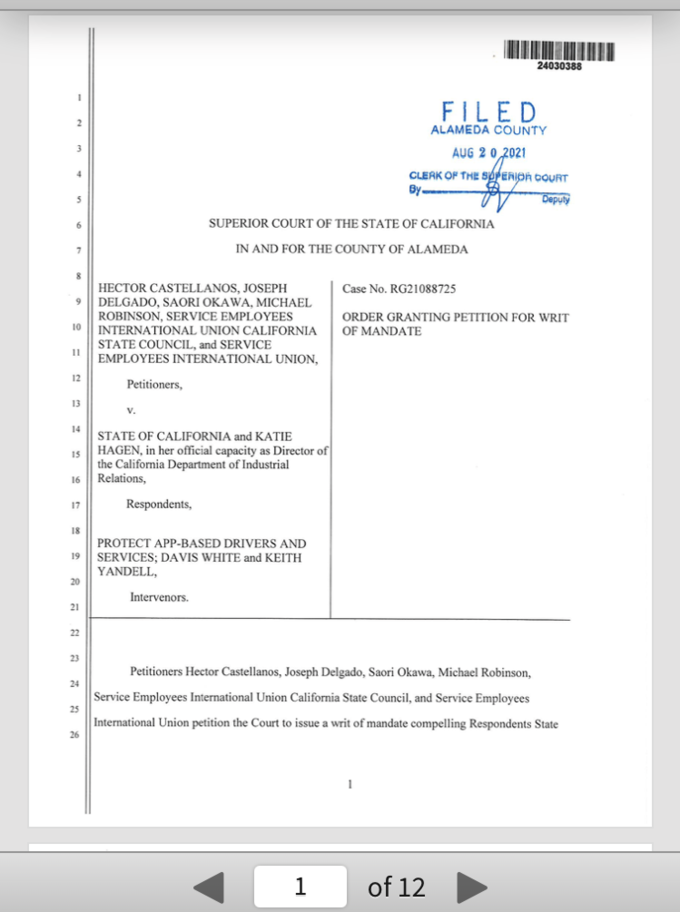
북가주 알라메다 카운티 수피리어코트의 프랭크 로쉬 판사는 지난 20일 ‘캘리포니아주에서 시행하고 있는 AB5법 적용을 우버, 리프트 등에는 제외해야 한다’는 내용을 골자로 한 주민발의안 22가 ‘위헌’이라는 판결을 내렸다. 로슈 판사는 주민발의안 22가 가주의 입법권을 제한한다며 근로자 보상 및 단체 교섭과 관련해 주의회의 권한을 침해함으로써 주 헌법에 위배된다고 판결했다.
AB5법에 따르면 우버, 리프트는 운전자를 독립계약자가 아닌 정직원으로 대우하고, 이에 상응하는 세금을 납부해 운전자에게 보험 및 휴가 등의 혜택을 제공해야 한다. 이에 우버 등 업체들은 공동으로 발의안 22를 추진해 작년 11월 선거에 부쳤고, 투표 결과 유권자의 58.63%가 발의안 22에 찬성해 공유경제 업체들이 운전자와 배달원들을 독립계약자 신분으로 유지할 수 있었다.
그러나 로쉬 판사는 발의안 22는 공유업체 회사들의 경제적 이익을 보호하기 위한 법안으로 노동자들의 권리와, 업무의 유연성, 안전 등을 보장해주지 못한다”며 “이 법안이 긱 노동자들을 노동자 보상법에 따라 노동자로서 법적 규정하는 캘리포니아주의 권한을 제한하기 때문에 위헌”이라고 판결했다.
로슈 판사는 “근로자의 보상을 규정한 주 헌법이 명확하게 부여한 입법 권한을 주민발의안 22가 침해했다”며 “만약 입법 권한의 제약을 원한다면 주민발의안 발의가 아닌 헌법 수정을 통해야만 할 것”이라고 판시했다.
이에 대해 우버 등은 곧바로 항소하겠다는 입장을 밝혔다. 우버는 성명을 통해 “캘리포니아주 유권자들이 통과시킨 주민발의안을 위헌 판결하는 것은 유권자들을 무시하는 것으로 옳지 않다”고 주장했다.
주민발의안 22의 찬성 측의 고프 베터 대변인은 “유권자의 권리를 지켜야 할 법원이 투표 결과에 반하는 판결을 내놨다”며 “법원은 심각한 실수를 저질렀고 우리는 즉각 항소해 승리할 것”이라고 강조했다.
소위 ‘우버·리프트 발의안’이라 불리는 주민발의안 22는 독립계약자 직원으로 분류를 엄격히 적용해 임시 고용 직원에게도 풀타임 정직원 혜택을 주도록 규정한 AB5법을 우버와 리프트 등 공유경제 업체들에 적용하지 않는다는 내용의 주민발의안이다.
앞서 캘리포니아 주의회는 우버와 리프트 등 독립계약자 직원에 의존하는 업체들에 대해 운전사·배달원 등을 정직원으로 대우해야 한다는 AB5 법을 제정해 지난해부터 시행에 들어갔다.
차량공유업체와 배달업체 입장에서 독립계약자 신분의 임시 직원들을 풀타임 정직원으로 전환하게 되면 최저임금이나 고용보험, 오버타임 등 각종 혜택에 따른 비용 부담이 늘어나 AB5에 반대 입장을 견지해 왔다. 주민발의안 22의 통과로 공유경제 업체들에서 일하는 운전자와 배달원은 독립계약자의 신분을 유지하게 됐었다.
Photo by Artem Podrez from Pexels
공유경제 업체들은 독립계약자 신분의 직원에게 지역 또는 가주의 최저임금의 120%에 상응하는 시간당 임금을 지급해야 하며 주당 15시간 이상 근무하는 직원에게는 의료보험과 함께 사고보험도 제공해야 한다고 주장했다. 다만 근무 시간 계산에서 대기 시간은 제외된다. 주민발의안 22에서 규정한 임금과 복지 혜택은 AB5법을 적용한 것에 비하면 매우 낮은 수준이다.
로슈 판사의 이날 판결은 지난 2월 주민발의안 22 무효를 주장하는 우버 등의 운전사 단체와 다수의 노조가 제기한 위헌 소송에 대한 판결이다.
회사와 비밀 유지 계약서에 서명한 직원이라도 직장 내 각종 차별 행위에 대해 공개를 허용하는 법안이 통과됐다.
지난달 30일 가주 의회를 통과한 이 법안은 개빈 뉴섬 주지사의 서명 절차만을 남겨두고 있다.
카니 레이바 가주 상원의원 사무실측은 “직장 내에서 인종, 종교, 성별, 연령 등 각종 차별 행위로 인한 피해를 입었을 경우 직원이 회사와 ‘비밀유지 계약(NDA)’에 서명했다 해도 피해 사실을 공개할 수 있도록 하는 법안(SB331)이 통과됐다”고 밝혔다.
레이바 상원의원은 “NDA는 피해 사실에 대해 침묵을 강요했고 책임을 등한시한 채 비밀 유지만을 요구했다”며 “이제 기업들은 직원에게 침묵만을 요구할 수는 없을 것이다. 주지사가 서명만 한다면 직원 퇴사 시 불법 관행에 대해 침묵을 요구하는 행위도 못하게 될 것”이라고 말했다.SB331은 ‘침묵 중단법(Silenced No More Act)’으로 불린다. 레이바 의원이 발의한 이 법안은 소셜 네트워크 서비스 ‘핀터레스트(Pinterest)’의 대외협업 매니저 이페오마 오조마 케이스를 계기로 추진됐다.
오조마는 지난해 NDA에 서명했음에도 직장 내 성차별 경험을 공개적으로 밝혀 논란이 된 바 있다.
한편, 현재 애리조나, 뉴저지, 뉴멕시코, 테네시 등은 성희롱 피해 등에 대해 NDA 서명 요구를 금지하고 있는 주다.
Labor Commissioner’s Office Reaches $1.6 Million Settlement Securing Unpaid Wages for 22 Bay Area Restaurant Workers
San Francisco—The Labor Commissioner’s Office has reached a $1.6 million settlement with the owners of Z & Y Restaurant in San Francisco, securing compensation for 22 workers for unpaid minimum wages, overtime, split shift premiums and tips identified in a wage theft investigation from 2019. Including expected post-settlement interest, each worker will receive on average approximately $73,000 under this settlement from payments that began today after the employer entered into an agreement with the Labor Commissioner’s Office.
“California law prohibits employers from taking tips left by customers for servers,” said California Labor Commissioner Lilia García-Brower. “Under this settlement, the employer will pay workers back all of those stolen tips totaling over $400,000.”
The Labor Commissioner’s Office learned of the potential violations in January 2019 after receiving a referral from the Chinese Progressive Association and Asian Americans Advancing Justice - Asian Law Caucus. The investigation found that 22 servers and kitchen workers were not paid properly. The servers were paid hourly and the kitchen staff were paid a fixed salary that was below minimum wage and did not include overtime. The employer illegally kept tips left for the servers and did not pay servers split shift premiums when they were scheduled to work both the lunch and dinner shifts.
In April 2020, the Labor Commissioner issued wage assessments and penalties totaling over $1.4 million to the owners of Z & Y Restaurant Inc. The employer appealed the citations. In September 2020, the Labor Commissioner filed a lawsuit to prosecute the restaurant owners for violations not covered by the citations, including the theft of tips, violations of California’s Paid Sick Leave law and record keeping violations. With the hearing on the citation appeal approaching, the employer reached a settlement with the Labor Commissioner that resolved the citations, the lawsuit, and pending wage claims that had been separately filed by four workers represented by the Asian Law Caucus.
Notification has been delivered to the current and former restaurant workers of their expected settlement payments and workers began receiving settlement payments with an average of approximately $73,000 per worker based on the number of hours worked during the audit period and the tips that were appropriated by the employer. The settlement also includes $9,550 in civil penalties payable to the state.
“A significant amount of the payment due to workers in this case is from stolen tips,” added Labor Commissioner García-Brower. “Workers must be proactive to protect their rights. Keep track of the tips you think you should have received to help support your claim and when approaching your employer about this issue, document the conversation and have a witness.”
The Labor Commissioner’s Office builds community partnerships to help workers understand their rights and employers know their responsibilities. The investigation with Z & Y Restaurant was opened after receiving complaints from workers who reported wage theft to community-based organizations. The Labor Commissioner’s Office worked with Asian Americans Advancing Justice - Asian Law Caucus and the Chinese Progressive Association, which represented some workers in the investigation.
Workers who believe they have not been paid properly, or who have questions about other labor laws like retaliation, can get in touch with the Labor Commissioner’s Office. Call 833-LCO-INFO (833-526-4636) or contact the office closest to your workplace.
The Department of Industrial Relations’ Division of Labor Standards Enforcement, or the California Labor Commissioner’s Office, combats wage theft and unfair competition by investigating allegations of illegal and unfair business practices.
The Labor Commissioner’s Office in 2020 launched an interdisciplinary outreach campaign, “Reaching Every Californian.” The campaign amplifies basic protections and builds pathways to affected populations so workers and employers understand legal protections and obligations, and the Labor Commissioner’s enforcement procedures. Californians can follow the Labor Commissioner on Facebook and Twitter.
캘리포니아주 법원이 우버 등 공유경제 ‘긱 노동자’들을 독립 계약자로 분류한 주민발의안 22가 위헌이라고 판결했다. 이에 따라 향후 항소 재판 결과에 따라 지난해 11월 주민 찬반투표를 통과한 이 발의안이 무효화될 가능성이 있다.
북가주 알라메다 카운티 수피리어코트의 프랭크 로쉬 판사는 지난 20일 ‘캘리포니아주에서 시행하고 있는 AB5법 적용을 우버, 리프트 등에는 제외해야 한다’는 내용을 골자로 한 주민발의안 22가 ‘위헌’이라는 판결을 내렸다. 로슈 판사는 주민발의안 22가 가주의 입법권을 제한한다며 근로자 보상 및 단체 교섭과 관련해 주의회의 권한을 침해함으로써 주 헌법에 위배된다고 판결했다.
AB5법에 따르면 우버, 리프트는 운전자를 독립 계약자가 아닌 정직원으로 대우하고, 이에 상응하는 세금을 납부해 운전자에게 보험 및 휴가 등의 혜택을 제공해야 한다. 이에 우버 등 업체들은 공동으로 발의안 22를 추진해 작년 11월 선거에 부쳤고, 투표 결과 유권자의 58.63%가 발의안 22에 찬성해 공유경제 업체들이 운전자와 배달원들을 독립 계약자 신분으로 유지할 수 있었다.
그러나 로쉬 판사는 발의안 22는 공유업체 회사들의 경제적 이익을 보호하기 위한 법안으로 노동자들의 권리와, 업무의 유연성, 안전 등을 보장해주지 못한다”며 “이 법안이 긱 노동자들을 노동자 보상법에 따라 노동자로서 법적 규정하는 캘리포니아주의 권한을 제한하기 때문에 위헌”이라고 판결했다.
로슈 판사는 “근로자의 보상을 규정한 주 헌법이 명확하게 부여한 입법 권한을 주민발의안 22가 침해했다”며 “만약 입법 권한의 제약을 원한다면 주민발의안 발의가 아닌 헌법 수정을 통해야만 할 것”이라고 판시했다.
이에 대해 우버 등은 곧바로 항소하겠다는 입장을 밝혔다. 우버는 성명을 통해 “캘리포니아주 유권자들이 통과시킨 주민발의안을 위헌 판결하는 것은 유권자들을 무시하는 것으로 옳지 않다”라고 주장했다.
주민발의안 22의 찬성 측의 고프 베터 대변인은 “유권자의 권리를 지켜야 할 법원이 투표 결과에 반하는 판결을 내놨다”며 “법원은 심각한 실수를 저질렀고 우리는 즉각 항소해 승리할 것”이라고 강조했다.
소위 ‘우버·리프트 발의안’이라 불리는 주민발의안 22는 독립 계약자 직원으로 분류를 엄격히 적용해 임시 고용 직원에게도 풀타임 정직원 혜택을 주도록 규정한 AB5법을 우버와 리프트 등 공유경제 업체들에 적용하지 않는다는 내용의 주민발의안이다. 앞서 캘리포니아 주의회는 우버와 리프트 등 독립 계약자 직원에 의존하는 업체들에 대해 운전사·배달원 등을 정직원으로 대우해야 한다는 AB5 법을 제정해 지난해부터 시행에 들어갔다.
차량 공유업체와 배달업체 입장에서 독립 계약자 신분의 임시 직원들을 풀타임 정직원으로 전환하게 되면 최저임금이나 고용보험, 오버타임 등 각종 혜택에 따른 비용 부담이 늘어나 AB5에 반대 입장을 견지해 왔다. 주민발의안 22의 통과로 공유경제 업체들에서 일하는 운전자와 배달원은 독립 계약자의 신분을 유지하게 됐었다.
공유경제 업체들은 독립 계약자 신분의 직원에게 지역 또는 가주의 최저임금의 120%에 상응하는 시간당 임금을 지급해야 하며 주당 15시간 이상 근무하는 직원에게는 의료보험과 함께 사고보험도 제공해야 한다고 주장했다. 다만 근무 시간 계산에서 대기 시간은 제외된다. 주민발의안 22에서 규정한 임금과 복지 혜택은 AB5법을 적용한 것에 비하면 매우 낮은 수준이다.
로슈 판사의 이날 판결은 지난 2월 주민발의안 22 무효를 주장하는 우버 등의 운전사 단체와 다수의 노조가 제기한 위헌 소송에 대한 판결이다.
[LA중앙일보]발행 2021/08/30 경제 6면입력 2021/08/29 19:00수정 2021/08/29 13:04
식사·휴식시간 미준수 시 하루 한 시간 지급 의무 가주 대법원 ‘정규 보상 비율’ 시급 변경 유의해야
이미 많은 고용주가 알고 있듯이, 캘리포니아는 오버타임 지급 대상자인 직원이 ‘언제’ ‘어디서’ ‘얼마 동안’ ‘어떻게’ 식사 시간을 갖는지를 법으로 규정하고 있다. 기본적인 룰은, 직원이 (1) 일을 시작한 지 5시간 이내에 식사 시간을 시작하도록 해야 하며, (2) 최소 30분의 무급 식사 시간을 주어야 하고, (3) 식사 시간 동안에는 업무 관련 지시나 일을 하도록 해서는 안 되며, (4) 장소는 직원 선택에 따라 회사 밖으로 나갈 수 있게 해야 한다. 관련 서류 및 보관할 기록 중에는 먼저 위의 내용과 같이 적법한 ‘식사 및 휴식 시간에 관련된 지침’을 직원들에게 서면으로 공지해주어야 한다. 이때 유의할 점은 일 시작 후 5시간 이내에 식사 시작 시각이 찍혀야 하며 적어도 30분을 준 기록이 있어야 한다는 점이다. 또 5시간 이상이나 6시간 이하로 근무할 경우 직원이 식사 시간을 갖지 않겠다는 동의서에 서명을 받아 보관하는 것이 좋다. 휴식 시간은 직원이 일 시작한 후 4시간 이내 되도록 중간에, 적어도 10분의 유급 휴식 시간을 주게 되어 있다. 10분 휴식 시간은 식사 시간과는 달리 시간을 기록할 법률상 의무는 없다.
식사 시간과 휴식 시간이 회사 일 때문에 지켜지지 않았을 때는 직원에게 한 시간의 급여를 ‘프리미엄 페이’로 지급해야 한다. 단, 직원이 하루에 받을 수 있는 최대 프리미엄 페이는 식사 시간 미준수에 따른 한 시간의 프리미엄 페이와 휴식 시간 미준수에 따른 한 시간의 프리미엄 페이, 총 두 시간의 프리미엄 페이를 받을 수 있다. 다시 말해 식사 시간을 하루에 두 번 이상 어겼어도 그날 받을 수 있는 최고 프리미엄 페이는 한 시간이라는 것이다. 휴식 시간도 마찬가지다. 프리미엄 페이를 지급할 때는 임금 명세서에 따로 명시해두어야 하며, 프리미엄 페이와 오버타임 계산과는 무관하다.
이러한 프리미엄 페이의 ‘한 시간의 급여’ 계산 방법에 대해, 지난달 캘리포니아 대법원에서 그동안 대부분의 고용주가 계산해오던 방식과 다른 방식을 제시하여 고용주들의 주의가 필요하다.
그동안 고용주들은 대부분 직원의 기본 시급으로 프리미엄 페이를 지급해왔다. 하지만 지난달 캘리포니아 대법원의 Ferra v. Loews Hollywood Hotel, LLC 판결에 따르면, 프리미엄 페이는 직원의 기본 시급뿐만 아니라 모든 비 임의적 추가 급여 (Non-Discretionary Bonus)를 포함하여 계산한 ‘정규 보상 비율(Regular Rate of Pay)’을 산출한 시급으로 프리미엄 페이로 지불해야 하며 이 판결은 소급 적용되어 공소시효 안에 발생한 이 전의 모든 프리미엄 페이에도 적용이 된다.따라서 직원의 기본 시급 외에 보너스나 인센티브, 혹은 성과급 지급 시 추가 급여를 지급하는 고용주는 식사 시간, 휴식 시간 관련된 규정에서 ‘프리미엄 페이’의 정의와 계산 방법을 수정하고 업데이트해야 한다. 직원이 인센티브나 보너스를 받지 않는다면 기본 시급으로 계산되므로 가장 심플하다. 예를 들어, 주 40시간 일하는 풀타임 직원이 시간당 15달러 외에 다른 인센티브나 보너스를 받지 않는다면, 직원이 식사 시간이나 휴식 시간을 못 가졌을 때는 15달러의 프리미엄 페이를 지급하면 된다. 하지만 시간당 15달러를 받는 풀타임 직원이 타겟 이상의 성과를 내어 100달러의 보너스를 받았다면 [(15달러x40시간)+100달러]/40으로 계산하여 17.50달러의 프리미엄 페이를 지급해야 한다.
그동안 이러한 공식대로 프리미엄 페이를 지급하지 않고 기본 시급으로만 지급했다면 미지급된 부분들에 대해 직원들에게 추가 지급을 해주거나, 직원들에게 소정의 합의금을 지급하고 합의 동의서를 받아 해결하는 것도 고려해 볼 수 있다.